CNYCA’S COVID-19 Economic Update: NYC job losses proportionately greatest among largest U.S. cities

Disclaimer: Content in this article was obtained from NYC Employment + Training Coalition’s (NYCETC) NYC Workforce Weekly and the Center for New York City Affairs (CNYCA) to serve as a resource for job seekers and those who are curious/interested in learning more about the current economy of the workforce.


New York City’s Covid-19 payroll job loss was 13.6 percent over the first year of the pandemic, more than twice the 5.9 percent national job decline and greater than the job losses experienced in the next 14 largest U.S. cities. These data reflect the annual revision to the monthly establishment payroll employment data that was released by the New York State Labor Department on March 11th (see next item below). San Francisco’s 13.2 percent job loss and Los Angeles’ 12.1 percent decline were close behind New York City’s. The next five cities – Philadelphia, Boston, Miami, Washington, D.C., and Chicago – were clustered in the -9 to -10 percent range. Four cities among the 15 largest in the country – Riverside (CA), Atlanta, Dallas, and Phoenix – had smaller job declines than the nation overall.

The New York City metropolitan area had 9.9 million jobs in February 2020, or 6.6 percent of the 151 million national job total. During the pandemic’s first year, the metropolitan area had an 11.2 percent job decline; the rest of the metro area outside of New York City saw jobs fall off by 9.1 percent compared to the city’s 13.6 percent decline. New York City had 3.1 percent of all U.S. payroll employment as of February 2020. 

The Labor Department’s revised payroll employment data also revealed that New York City’s job losses in 2020 were greater than previously reported. In our February 12th report, New York City’s Covid-19 Economy Will Not Snap Back, we wrote that the February-December 2020 payroll job loss was 507,000, a decline of 10.9 percent. The job level for last December has now been revised downward by the Labor Department to show a drop of 575,000 from February, a revised job falloff of 12.3 percent. The annual revisions are based on administrative data compiled in connection with the payment of employer payroll taxes for unemployment insurance purposes. (The employment figures cited here are not adjusted for seasonal effects since pandemic-related impacts have been much greater than the usual pattern of seasonal ups and downs.)

The January employment levels dropped further because there had been some seasonal hiring in November and December that then ended. Even with a moderate 40,000 increase in February employment levels, the February 2020 to February 2021 New York City change shows a drop of 635,000 jobs, or 13.6 percent. The table below shows these 12-month job changes for individual industries grouped into the three categories (Essential, Face-to-Face, and Remote-Working) we feel best reflect the predominant dynamic caused by Covid-19 economic impacts. 

The revised data underscore the now-commonplace observation that the Face-to-Face industries have borne the brunt of the adverse pandemic economic and employment impacts. Led by the steep job losses in leisure and hospitality and the arts and entertainment industry, Face-to-Face industries as a group have seen a 25 percent drop in employment compared to a seven percent decline in the Remote-Working industries and a slight three percent decline in the Essential category. Nearly four out of every five New York City jobs lost over the past year have been in the Face-to-Face industries, where most workers do not get paid if they don’t work and where only a tiny fraction of workers can do their jobs remotely.

The annual employment revision saw a handful of industries with significant downward revisions while a smaller number of industries had upward revisions. Two of the hardest-hit industries had sharp downward revisions: hotel employment was revised down by 44 percent and eating and drinking places had a 12 percent downward revision. On the other hand, the other among the three hardest-hit industries –arts, entertainment, and recreation – had a 44 percent upward revision in its job numbers. However, as the above table shows, this industry still suffered a 51 percent job loss over the past year.

Child care employment was revised down by 21 percent and the revised job levels for temporary employment agencies were 30 percent lower. It had earlier been thought that given its essential role, employment had been fairly stable in grocery stores and drug stores; however, the more definitive administrative data resulted in a 10 percent downward revision in the number of grocery store jobs and a 17 percent negative change in drug store employment. There was a surprising upward revision elsewhere in the retail sector, with clothing store employment revised up by 43 percent. Among upward revisions in the Remote-Working industries, employment in publishing was reported to be 10 percent greater in the revised data, and there were upward revisions of five percent in investment banking, six percent in computer services, and eight percent in management consulting.

Re-envisioning the Workforce Development Sector and Labor Market Updates (March 2021)

Please note this data applies to the Greater New York City Metropolitan area and the United States only.

For many workforce development agencies, there are many factors that prevent job seekers from pursuing their dream jobs/careers.

One of the top factors would be the lack of specialized training/certifications in the field that they are looking for. Workforce practitioners have also mentioned that there are young people who need to work and cannot afford the classes, the program hours are increased, they have language barriers, not work ready or do not meet specific qualifications of the training programs.
What can the workforce development agencies do to remove this barrier for job seekers? Part of it comes to strengthening partnerships with other workforce agencies and employers versus building new training programs that are relevant for job seekers. For example to be specific, organizations may want to look into building long-term and patient partnerships (ideally in retail or hospitality) if that is what their demographics are looking for.

The second top factor would be the lack of job specific work experience – and this applies to both what job seekers can offer to the employer, and what employers are looking for in the ideal candidate. Some candidates that workforce agencies work with, may have narrow goals and expectations but not having a plan B. On the other hand, employers want what they want and are not so interested/engaged in what the referral has to say about the candidate. This means the agencies need to have those conversations with the employers up front more, especially when initiating a relationship. It is not a product that workforce agencies are pushing — but more so a relationship and partnership that they want to build. Not all employers see it that way, they see it more as a product. The transactional product versus quality partnership experience problems definitely supplement and overlap.
Also, because of changes caused by this pandemic, we can see retail and hospitality declining (as data is indicated in the later part of the labor market review). For those from the world of NO, it is important to educate employers on what is reality – the unemployment rate.

The third top factor would be educational requirements. This is often the case as certain employers are looking for — let’s say someone in their Accounting department to do some bookkeeping, processing invoices, etc. If your organization offers a training/certification program that caters to job seekers that are looking to land an Accountant/Bookkeeper job right out of completion, chances are 50/50. There are employers that do not consider graduates who do not hold a degree in Accounting, so it can prevent job seekers from obtaining employment with just the certification.

The fourth top factor would be life circumstances — which all of us go through in our lifetime. We are humans. Health concerns (with COVID still around), lack of consistent support system (energy, engagement, inspiration, motivation, stability) and childcare concerns (child remote learning, and taking care of child while parent is working from home) all play a role in this factor.

What changes should be considered when re-envisioning the workforce development sector?

(Suggested from workforce development professionals)

  • More workforce agencies working collaboratively when approaching employers for sustainable business partnerships.
  • Sector-specific training and upskilling programs in deep partnership with businesses.
  • Improve funder relationships and expectations, inaccurate or unrealistic requirements and metrics based on the populations served/sectoral needs.
  • Increase the focus in career exploration with job seekers; training program development and re-programming to meet the future of workforce.
  • Deeper, structural partnerships and consistency between businesses, government, social service and educational institutions.
  • Build house account with employers on a daily basis to better track interviews/screenings while using that tool to evaluate candidates (Deliverables make it difficult to build what we really need for participants).
  • Quantifying the need for bridge programs for jobs that are in high-growth fields.
  • Improve business trust in workforce development providers’ participants.
  • Adjust business expectations for labor market.
  • Reduce organizational competition.

Labor Market Updates/Review

As of March 2021 — the overall NYC Labor Market indicates that in 2019, there were about 4.5 million jobs and by 2025, there will be an uptick to about 4.6 million jobs; which will result in about a 125,000+ gain.


NYC projected growth sectors by occupation, Standard Occupational Classification (SOC)

  • Community and Social Service Occupations
    • Overall 94,000+ jobs as of 2019 to 106,000+ jobs by 2025; resulting in 12,000+ jobs gain
    • Social and Human Service Assistants: 19,000+ jobs as of 2019 to 21,000+ jobs by 2025
    • Child, Family and School Social Workers: 15,000+ jobs as of 2019 to 13,000+ jobs by 2025; resulting in > 1,000+ jobs gain
    • Educational, Guidance and Career Counselors: 11,000+ jobs as of 2019 to 12,000+ jobs by 2025; resulting in > 1,000+ jobs gain
    • Mental Health and Substance Abuse Counselors, Community Health Workers, etc.
  • Construction (growth sector by business classification)
    • Overall: 138,000+ jobs as of 2019 to 133,000+ jobs by 2025; resulting in 5,000+ jobs decline
  • Healthcare Support
    • Overall: 446,000+ to 363,000+ jobs
    • Home Health and Personal Care: 287,000+ jobs as of 2019 to 363,000+ jobs by 2025; resulting in 124,000+ jobs gain
  • Computer and Mathematical Occupations, including technology
    • Overall: 146,000+ jobs as of 2019 to 170,000+ jobs by 2025; resulting in 24,000+ jobs gain
    • Software Developers, Analysts and Testers: About 45,000+ jobs as of 2019 to 56,000+ jobs by 2025; resulting in 11,000+ jobs gain

NYC projected loss sectors by occupation, SOC

  • Food Services
    • Overall: 243,000+ jobs as of 2019 to 300,000+ jobs by 2025; resulting in 43,000+ jobs decline
    • Fast Food and Counter Workers: 85,000+ jobs as of 2019 to 82,000+ jobs by 2025; resulting in 3,000+ jobs decline
    • Waiters: 77,000+ jobs as of 2019 to 61,000+ jobs by 2025; resulting in 16,000+ jobs decline
    • Cooks: 43,000+ jobs as of 2019 to 39,000+ jobs by 2025; resulting in 4,000+ jobs decline
    • Food Prep Workers: 28,000+ jobs as of 2019 to about 25,000+ jobs; resulting in 3,000+ jobs decline
    • Attendants and Helpers: 21,000+ jobs as of 2019 to 17,000+ jobs; resulting in 4,000+ jobs decline
    • Dishwashers: 15,000+ jobs as of 2019 to 12,000+ jobs by 2025; resulting in 3,000+ jobs decline
  • Office and Administrative Support (SOC 43)
    • Overall: 638,000+ jobs as of 2019 to 629,000+ jobs by 2025; resulting in 9,000+ jobs decline
    • Administrative Assistants and Secretaries: 134,000+ jobs as of 2019 to 125,000+ jobs by 2025; resulting in 9,000+ jobs decline
    • Others: Clerks, Human Resources Administrators, Payroll Assistants, Processors, Typists, etc.
  • Retail
    • Cashiers: 75,000+ jobs as of 2019 to 68,000+ jobs by 2025; resulting in 6,000+ jobs decline
    • Salespersons: 117,000+ jobs as of 2019 to 103,000+ jobs by 2025; resulting in 14,000+ jobs decline

Effective Virtual Interviewing (Spectrum Edition)

Image via Charter

During the interview process, there are many ideal competencies and traits that Spectrum is looking for. Spectrum likes their employees to be great communicators, problem solvers, adaptable, detail-oriented among others, enthusiastic efficient and don’t forget – technologically savvy! These are what make a successful employee at Spectrum.

Spectrum’s Talent Acquisition Senior Recruiter of 15 years in the Greater NYC area speaks and shares his 9 tips in this article to job seekers.


When preparing for that interview, a hiring manager typically reaches out to Talent Acquisition and asks to schedule an interview. In most cases nowadays since 2020, that interview will most likely be virtual instead of being in person. This scenario is becoming increasingly more common. Nearly 75% of executives use real time video to interview their leading candidates and 50% of them leverage it to narrow down their applicants. The process enables employers to open up their talent pool to interview candidates who live all around the globe, and not just the ones who live down the street. It also cuts down on traveling expenses.

So with that virtual interview or video interview, well it’s a normal job interview that leverages video technology where a lot of conversations take place remotely. So rather than meeting face to face, the manager and the candidate are going to connect with each other online using video softwares. The tools typically required for these types of meetings involves a computer, a built-in external/internal video/camera and a microphone, a reliable internet connection (try not to do it wirelessly because most of the time that won’t work very well), and headphones if desired.

So generally a video interview follows the style of a traditional in-person interview. Here’s going to be a few key considerations to keep in mind:

  • For perspective employee, try to make that pitch by a video conferencing software such as Skype, Zoom, Google Hangout. It may be a bit daunting, especially if you are not accustomed to it.

I will give you 9 virtual interviewing tips to reduce the stress, aid in helping you stand out of the crowd, and in the end hopefully help you land a job – whether that is with Spectrum or with another company, these tips still work.


1. Test your technology. The minute you agree to a virtual interview, you need to ensure that you test your technology and ensure that you are set up for success. You want to also check your internet connectivity, you’re going to confirm that your camera and microphone is working. If the picture is blurry or you’re experiencing an echo, you might need to buy a different webcam, you might need to not use the computer’s built-in microphone – but use the speaker phone instead or a separate phone. So this is going to be hard to do 5 minutes before so you don’t want to wait until the day of the interview to figure it out. Most computers these days will allow you to use the audio and video connection. Some of them, will have a choice of using just one single device for this video and the audio. But when you have the option to use separate devices, that is the option you ought to take (one phone for the video portion and one phone for the audio portion – like a phone, laptop or tablet).

Of course in some instances, you are able to just only use that one single device but that’s only going to work if everybody is on the same network – for example, if you are doing internal interviews. But when everyone is on separate networks, the best practice is ensuring you don’t lose the connection altogether – if you prefer to use separate devices.

Here’s a note to keep in mind. On the day of your virtual interview, you will also want to test your internet connection again even though you tested it a few days before. Make sure you do it on the morning of.

Being technologically savvy is one of the 10 traits that employers are going to look for. If you come onto the virtual interview fumbling around with your audio or your lighting during the call, you’re giving the hiring manager a reason to question if you’re the right candidate for the job. Make sure you do not only test it beforehand, but on the day of, you’re going to test it again.


2. Be aware of the surroundings. You’re going to set the scene, minimize the amount of distractions while testing your technology, determines where the interview is going to take place. You want to find a room with optimal lighting, preferably near a window or a wall. Somehow, you’ll be able to guarantee that you are the focal point of the conversation. So the best practice in relation to lighting is to simply set up a bright light that is focused on your face. This should at least as bright as or be brighter than the background behind you. Therefore, this will help you and your personality stand out. It will minimize the background. Also, if you are using window lights as the light changes, because sometimes it gets very bright and sometimes it gets very dark – where in some cases it will cause your camera to start struggling and it will become a distraction to the interviewer instead of the help you thought it might be. Choose the lamp effectively.

Whether you sit on your living room couch or home office, be sure to tidy up your surroundings. It is hard to convince the employers that you are detail-oriented or you are organized, when they are looking behind you and they visibly see papers all over your desk. This might sound remedial, but trust me – as a recruiter, we see this all the time. You need to think, sit in front of your computer and look at yourself and behind you – what the hiring manager will be seeing in the background.

Once you have all of that settled, you are going to want to limit your distractions. This means turning off the TV, turning off the stereo, closing any nearby windows just so you can muffle traffic and neighborhood noise.


3. Sit down and be prepared to engage. Just because you’re in front of a computer, doesn’t mean you can search the web for answers in a middle of an interview OR avoid to start clicking around when a hiring manager asks you a question. So you want to appear focused and ready to answer the question without the help of the internet. No one wants to think that you are cheating on your answers. Trust me, it happens.

You want to do your research on the company ahead of time before you sit down. Print out a copy of your resume and have it near by so you don’t get the key talking points that you want to bring up. However, as with any interview, you’re going to come prepared with answers to any coming questions. This isn’t particularly an interviewing conference call, but there are some that you are going to know how to answer. For example, “why are you interested in the role?”, “what do you know about the company that you are interviewing with?”, “what do you consider your greatest weakness?”, “what do you consider your greatest professional achievement?”, “tell me about some of your challenges and how you dealt with them”, “what are you looking for in a new role and why are leaving your current role?”

The key here is, you want to avoid memorizing each response. That’s not engaging. You don’t want to over rehearse. Instead, write some high level thoughts down on a post-it and stick it to your computer. So being aware of how far your eyes are moving from the screen, because if your notes are far away, it will appear that you are searching for your answers and reading them instead of engaging in that dialogue.Note that you don’t want your notes resting on your lap or from a place where you want to look far away from the screen. In that case, it is going to come quite apparent that every time you are answering a question, you are looking away from your interviewer for an answer. Of course, that is not a good plan.

You want to come prepared and engaged. And how do you engage? You will do that by practicing our next tip below.


4. You have to come mentally thinking about this being a “dialog”, not something that is memorized. So you are going to have to practice. Practice on your dialog that you will have with your interviewer. Don’t focus on trying to memorize all of your anticipated responses. You’re not going to get all of your questions asked anyway. When you have an interview, you want to have a good conversation. Not rehearsing the points that you memorized, because you are going to sound like a robot throughout the interview, whether you are answering, asking or even giving your quick elevator pitch. It is easy to tell that you do not sound genuine.

It is a good practice to run through a practice with your friend. Pull your family members in and have that conversation. This is going to give you a chance to rehearse with different personalities since each person will be asking you a question or answering you a bit differently and it will throw you off so that you will be more ready when you begin to interview with your employer.

So while you are practicing your interview with your friends and family, it might seem a little awkward. But one of the keys that will benefit you from doing that though is you will have a safe atmosphere where it is okay to make mistakes. You can learn from them. You may not have answered the way you thought you should have or you didn’t come across the way you anticipated. That’s where you can hone in your interview skills so that you are better prepared for the real thing.

It is really important that when you are interviewing, you’ve got to keep it really simple. You don’t want to feel like you have to give a long-winded answer if a short answer will do. You won’t know that until you practice some of those answers. So being able to be clear and concise is the most important thing that you are going to need to do in a job interview. So a great answer will always tell your interviewer at least 3 things. Every one of those answers put it on the back of your mind. That answer ought to say what you did on the job. You don’t want to say how well you did what you did on the job. And the very important one you ought not to leave out, because most people do, is your answer ought to tell what was the impact of the action you had on the business or project. So what you did, how well you did it, and the impact it had.

When you prepare those types of answers and you are able to give them freely without memorizing them, or at least not sounding like you memorized them, now you are ready to have a dialogue with your interviewer – and not just a rehearsed, memorized set of answers.

Well that in fact, brings us to our next point. First impressions still count, even in a virtual environment. In with that in mind, there will be 2 tips that I’m going to mention.


5. Monitor your body language.  Obviously, you can’t firmly shake a hiring manager’s hand or easily exude enthusiasm through the video, but what you can do is monitor your body language. The main way to communicate confidence during these interviews; well, you’re going to sit up straight, you’re going to smile, you’re going to keep your camera at eye level. You want to avoid the tendency to look at yourself on the computer monitor while you talk. I would suggest you put your computer/laptop on a box so that your eyes are right on the center of the screen and you’re not looking down on yourself, or having to look far up because research shows that employers are more likely to remember what you say if you are maintaining eye contact. So you want to keep your focus on your camera when you’re talking – not looking at the hiring manager. The time when you look at the hiring manager is when he/she is talking.

This brings us to the 6th tip here. You gotta make those first impressions count.


6. Dress for success. So you might be sitting on your bed, but you shouldn’t look like you just rolled out of the bed. You want to dress like you’re going for an in-person interview. Just because a person can’t see what you are wearing from waist level, that doesn’t mean you shouldn’t do your best to dress. For men, you’re going to wear a button up shirt and dress pants. For women, you might want to consider a dress, skirt and/or a blouse. Besides not knowing if for some reason you’re going to have to suddenly stand up in the middle of an interview, well professional clothing will show that you are serious about the job.

Well, there are personal benefits as well. Studies show that people feel the most authoritative, trustworthy and confident when they are wearing formal business attire. So when you feel good about yourself, it is easier to execute a lot of these tips especially our next one.


7. Connect on a Personal Level. You never know how many interviews a company may conduct for a position. You may be at a long list of people that the hiring manager or recruiter spoke to that day. That’s why it is important to make that small connection. So don’t be afraid to have a short aside about a common interest when you’re in an interview. The recruiter or hiring manager might enjoy the break from the routine questions that they have gone through that day.

You and I know that it is not easy to connect with everyone, but it is a crucial part of the interview. Don’t be afraid to share about yourself or connect about that one thing you discovered that you both like. Take a moment and touch on it, because you want the interviewer to be able to remember a story you told or a common interest that you both share. That is one of the best ways to prevent you from simply blending in with everyone else who came in and interviewed for the same spot.

Trust me, these little tips are what we as recruiters go through each and everyday. We trust that that investment in your time and you will be able to remember these. Use them on yourself and you will see the difference in your own interviewer.

Now, making that connection will really come from a predetermined mindset to employ this next to last tip.


8. Be Yourself. The hiring team is essentially looking for the interviewee to answer 2 major questions. The whole point of the interview: 1) Can you do the work that they need? But guess what, there’s another side. 2) Will you be able to fit into the company culture and department that the hiring manager has as well?

A key task for the recruiting and hiring team is in determining whether in fact, yes – you can do the work, but how will you fit in the team/company’s culture? This can be challenging during your virtual interview because there’s this physical disconnect. We don’t get to see your whole body and we don’t see how you reply to every question, or are your feet moving around a lot, or are you twirling your fingers. We don’t get to see a lot of those verbal or visual cues that helps to go along with your comfort level. So it’s more difficult for your interviewer to understand your enthusiasm or screen them, so make sure that you are more expressive when you are answering the questions.

If you want to use your hands, you may want to do that freely. Let your expressions be bold. If you are a more of a straightforward kind of person, be sure that you’re using those active listing techniques so that your dialogue is free and flowing between you and the interviewer.

Some people are great interviewers. They’re going to be able to tell your vibe. They’re going to be able to tell if you’re going to fit the company culture right off the bat. With that being said, you want to be able to walk away and give your interviewer a reason to push you to the second round of the interview, by shining a light on how you can help the organization grow.

This begins with not just with can you just do the work, but can you fit into the company culture. They are not looking for a robot. They are looking for you. So be sure that you are being yourself on these interviews.

This is going to lead us to our last point.


9. Don’t forget the Professional Graces. As soon as that interview is done, you’re going to do some immediate follow up within at least 24 hours of the interview. You’re going to send an individual Thank You Email to everyone you met. Sometimes they don’t provide you with that information so you should send that Thank You Note to your recruiter and they will forward it to the leadership team. But, make sure you’re taking that extra step.

Put it in a Word Document so you can upload it to your profile so the next recruiter can see that you’re communicative and that you possess those professional graces. It’s not only going to show that you valued your interviewer’s time, but it’s going to give you the opportunity to resell yourself and express your unique traits that you can bring to the role, or share any talking points that you forgot to address.

If there was something specific that you have bonded over during the interview, you want to mention it briefly and follow up in the Thank You Email so you can keep it on the top of your mind.

Or, if the interviewer brought up a particular business challenge, you’re going to use that to follow up; as a way to propose that potential solution – saying something to the affect of: “It was fantastic to have met you today and I remembered one of the challenges that the business had was ITEM A and here’s what I have done in the past that I can do to help.”

You want to keep the email concise of course. It is not a paragraph. You want to just leave a short note and leave a lasting impression, not one that will immediately end up in the circular file because it was too large or too long.


These are the key tips that we as recruiters have seen either in people that are not employed OR employed effectively. It helps them stand out and be remembered. They bring the right successful profile, but if they’re not able to get the hiring manager to remember it, then that becomes a challenge.

New Year’s Resolution for Job Seekers

Image via Ashley Brooke Photography

Job searching in the middle of a pandemic has been the most challenging for job seekers. Job seekers have been blindly applying for 10 months or more and building their network. Some have been plugging away and applying to jobs since March and have had little success with interviews and no offers with no feedback. And some have been forced (by the pandemic) into starting their own businesses/side hustles to pay off student loans, rent, debt, etc.

Whatever the case may be, job searching has always been challenging. However, the best way for it to be a success is to remain positive, and to not give up. Giving up is not an option. Show employers that you are willing, wanting and able to work!

Here are some New Year’s resolutions to help jump start your motivation and pave way to a successful job search.


  1. Connections can help a great deal. Spend more time talking to people than submitting your application to posted job ads.
    • The quickest way to get back into the job market will be your network and your referrals. Who knows that a 30 minute coffee chat could turn into an opportunity of a lifetime.
    • You would be surprised that you will have connections in your circle who know about the existing job vacancies that aren’t posted on job boards. In other words, the hidden job market.
    • When reaching out to your connections, you may want to follow the email template below:
      • “Hi [Connection’s Name],

        I hope this email finds you well. How was your holiday season and New Year’s? It is shocking how 2020 flew by.

        I wanted to reach out because things have changed at [Current Company] and am specifically looking to transition to [Job Title] at [Industry/Sector/Company] where I can utilize my [Insert Relevant Skills] to be able to do [Insert Desired Activities].

        I wanted to reach out to see if you know of anyone who could connect me to such an opportunity. I understand that this is a big ask and your time is valuable. If it is too much right now, don’t feel any pressure as I totally understand.

        Either way, I hope you are staying healthy and safe. I look forward to catching up with you soon!

        Best Regards,
        [Your Name]”
  2. Update your resume.
    • Your resume should always be different and tailored based on the job description. Study the job description carefully and proofread your resume before uploading it on the job board because you want to get past the Applicant Tracking System.
      • Education: Don’t just focus on the schools and institutions that you have attended. Include organizations that you were involved with as well! If you had a GPA that is higher than a 3.0, showcase it and be proud of that achievement!
      • Work Experience: I mention this all the time but make sure your duties are not only duties, however make it into an accomplishment by incorporating quantifiable metrics using numbers and percentages. Also, tailor it towards the field that you are interested in.
      • Leadership Experience: This is important whether you are looking for a job or internship. If you were active in many organizations and clubs, list it and highlight that leadership because that is always going to be a plus.
      • Skills and Projects: Again, just like your work experience, tailor your relevant skills towards the field of interest. If you have worked on special projects that were tailored towards the specific field of interest, include that as well.
    • Have your peer, mentor, career coach or a professional critique your resume.
  3. Hone your interview skills.
    • Have a friend or family member interview you and provide feedback.
    • Participate in mock interviews. Especially during this pandemic, many virtual platforms are partnering with big companies (such as Moody’s, Google, McKinsey & Company, Credit Suisse) to connect with nonprofit organizations and social ventures to give back and provide these free services to job seekers.
  4. Sharpen your skills.
    • If there is a specific field you are looking to go into or a job that you want to apply for, study the job description closely and discover if your educations and skills are going to be a good match.
    • If you do not have the skills that the employers are looking for, you should look into taking online classes that will help you move forward in your intended field.
  5. Map out what you are looking for.
    • Don’t just randomly apply for jobs because you need a job. Seek purpose in the kind of job you want. Make sure your job search has a path. What is it that you really want in your job? Do you want to work entirely remote? Do you want to work on-site? Do you want to work flexible or set hours?
    • Follow the SMART goal outline via FlexJobs.
      • (S)pecific: What industry or sector do you want to work in? Do you want to stay local, or are you willing to move? How much do you need to earn?
      • (M)easurable: To meet your goal, how many resumes will you send out per week? How many networking events will you attend each month?
      • (A)ttainable: Do you understand the difference between your dreams and your goals? Keep in mind that some things are beyond your sphere of influence. You cannot control how many interviews or offers you get, but you can set a goal for the number of business connections you’ll make each month.
      • (R)ealistic: What can you achieve in this moment? If you have little experience, it’s unlikely you can move directly into a C-level job. Be honest with yourself about what you can achieve right now, but also plan for bigger and better goals in the future.
      • (T)imely: When is your deadline? This aspect of goal setting is often overlooked, but deadlines—even arbitrary ones—are important motivators. Since you can’t control when you’ll get hired, you may find that a resolution such as “I will find a job within the next six months” is less effective than “I will apply to at least five vacancies this week.”
  6. Target specific companies that you are interested in working for.
    • Make a list of your top target companies
    • Research, research, research them!!! Anything you can find such as articles, interviews with executives, surveys, podcasts, etc.
    • LinkedIn is a valuable platform for you to use in landing your dream job at your target company. From there, you may want to locate contacts who can refer you into your target role such as a hiring manager, team lead, recruiter or a friend who was hired there.
    • Reach out and cold email them.

Staying Engaged In Your Job Search During the Holiday Season

Image via Woman’s Day

Although the holiday season is the most exciting time of the year, don’t be fooled. It is also the busiest time for many people. The job market is indeed, the most active during this season.

While COVID-19 has caused considerable disruption to services for many employers, you may be thinking — Will this impact holiday hiring?

According to iCIMS’s Monthly Snapshot Report for September, “During the height of the pandemic, hiring for full-time retail roles dropped to account for only 28% of hiring activity during April and May. In August, we’re seeing an increase in the demand for full-time employees, now making up 34% of all hires—still 10 percentage points away from pre-pandemic levels.” The retail industry is going to be busy as they are in dire need of seasonal workers especially during the holiday season.

This is a good time to apply for jobs since job seekers often suspend their job search during the holidays and will be spending time with their loved ones. This often means that there is less competition for jobs however, this can also lead to missed opportunities. This also means that there will be fewer resumes to compete with, and your skills/experience may be a potential match to the employer (since many employers are STILL looking to fill their roles before the New Year).

It is completely understandable that job searching during the holidays are not meant for everyone. If you are one of the job seekers who are planning to suspend your job search for the season, you want to take this time to stay on top of your organizational skills. Revamp your resume and cover letter so that when you are back in your job hunt, you won’t have to stress over proofreading and overlooking the little details. Set yourself reminders, organize your notes/folders and prioritize your goals so that you can avoid making the same mistakes that you have previously made throughout your job search.

While it is important to spend quality time with your family and loved ones, if you are one of the job seekers who has too much free time — during your downtime, don’t forget to stay productive and continue your job search in hopes that your holiday gift will be landing a new job!


So, what if you were interviewed right before the holidays and are in the process of waiting to hear back? This is the most stressful stage for job seekers, especially for those who anticipate that they may not have gotten the job. But then, you don’t want to come off pushy. What is the best way to follow up? If you were out of the workforce for a while and want to reconnect/network, how do I approach them during the holiday season?

❄ Send Holiday Greeting Cards to Recruiters/Hiring Managers
࿏࿏ Not all recruiters/hiring managers will remember you since they have met a lot of other faces as well. Be sure to include a brief reminder of who you are, your point of contact at the company.
࿏࿏ As you pick out your holiday card, please be sure that the card is appropriate and generic.
࿏࿏ Not all job seekers will invest their time and effort to do this, so this can potentially set you apart from others.

❄ Discuss About Your Employment Status / Job Search At Holiday Gatherings
࿏࿏ It is important to let your friends, family and distant relatives know that you are looking for a job. You will never know who they may know. They may know of someone who is working at your target employer. Or, they may even be an employee of your target employer.
࿏࿏ Making new connections or re-establishing old connections can actually land you a job offer even by just casually speaking to them about what you are looking for.

❄ Use This Time As a Networking Opportunity
࿏࿏ Virtual fundraisers and virtual Zoom holiday parties with friends during this time allows you to connect and mingle with many like-minded individuals that you connect you to potential jobs that you want to work at.
࿏࿏ While it is a holiday party, make sure you don’t come off as too professional and stiff. Remember, this is a time to gather and enjoy your time with friends. You do not want to come off as desperate, however you just want this topic to casually arise in the conversation.

Why Mock Interviews are Helpful and Even More Crucial Right Now

Image via Freepik
  • Eight months later, we are still at the peak of the COVID-19 pandemic. Job seekers WILL appreciate the opportunity to hear the much needed feedback on their interviewing skills. It is certain that there are questions that job seekers had since the start of the pandemic, that they awaiting for. This is a good time for interviewers to schedule a virtual interview using platforms like Zoom, Google Meet, Cisco Webex, especially career experts and coaches to patiently and holistically give job seekers their answer and provide them with insight on the job prospects.
  • You have another person (such as a career expert) who can give you so much insights on how to answer behavioral or situational questions, how to outline your strengths/weaknesses by providing some good examples and key takeaways, how to be more structured in your answers, etc. You can use those tools and their constructive feedback to practice on — before going on your actual interviews, such as telling good examples or stories with answers and telling stories in a concise and easy way to digest.
  • Job seekers will be able to gain more perspective on what they had initially perceived as impediments, such as their employment gaps and lack of professional experience. With the interviewer’s feedback, not only will the job seeker be able to gain more confidence with what experience he/she already had, but he/she will also have a better understanding on how to present their strengths (plural here!) and weaknesses.
  • You can always practice with a professional (like a career coach or a friend/family member who is very well rounded with the interview processes) who is great at giving constructive feedback that’s also actionable! Job seekers would appreciate this as they would love to hear more of the in-depth perspective from their interviewer’s side on why some of their answers weren’t as successful. One of the areas that interviewees often get stuck on is where specifically they can pull back or delve deeper into… and this depends on the type of questions they are asked and how they formulate their answers.
  • Job seekers will find it very helpful in their answers to questions where they lack confidence in themselves. They will most definitely use their interviewer’s ideas going forward in their job search. (Note to interviewer: Make sure your input is valuable and gives meaning to the job seeker!)
  • Obviously, mock interviews offer job seekers/interviewees this opportunity to practice with their interview skills. It is definitely going to be a wonderful/life changing experience for them to learn more about the things that they should be doing and not be doing in the actual interviews. When they have someone to practice with, it allows interviewers to catch things and point out mistakes that the job seekers did not catch or notice — and this is where their suggestions come in handy for the job seeker’s interview and resume. And this begins with the interviewer’s patience in answering all of the interviewee’s questions and concerns to set them up for success.
  • Many job seekers need that guidance and help with acing their actual interviews! To make it as informative and helpful as possible to the job seeker, interviewers should take their time to explain where the interviewee did well, where he/she needed to improve, and provide some examples/situations of how to handle certain interview questions.
  • Mock interviews allow job seekers to learn something and walk away with new knowledge and tools to use for their future interviews (for example, they may learn a new way of answering questions when it comes to identifying a problem and being able to articulate how they solved it). In a nutshell, job seekers will gain that valuable experience which felt “real”. More importantly, it should help the interviewee self-reflect. Not only does it help improve the way the interviewees answer questions or ask questions, however it will allow the interviewer to provide excellent critique of their resumes and body language, as well as tone. This will certainly help job seekers with future prospects, boost their confidence/speech as it will allow them to prepare more professionally.

How do you know when you are in good shape to make a case for your candidacy with employers?

  • You’re thoughtful and well spoken about your experiences and skills.
  • You’re creative and solution-oriented and offered a great example of such an instance.
  • You’re succinct and articulate in framing your experiences.
  • You prepared a number of stories and situations from your previous experience to concisely demonstrate skills and capabilities that the interviewers will be looking for.
    • You developed a strong pitch outlining how your experiences and strengths match the role’s job description.
  • You did a wonderful job in walking through your past work experiences in showing concrete and numeric examples of how you succeeded by training your storytelling muscle, as well as getting into the nitty-gritty of your projects.
  • You focused not only on your soft skills, but you strongly infused your responses for your hard skills/technical abilities.
  • You discussed about your strengths and weaknesses.

Suggestions on how to be more ready and how you can improve:

  • When describing these scenarios to your interviewer during the mock interview, you could definitely insert just a touch of levity to the story so that it would resonate that much more with the prospective audience.
  • If applicable, you can emphasize your past leadership experiences more, where you have led teams. This is a hard to come by skill and you have one or more instances that you can speak to. Be more assertive in announcing this experience. If you add more humility, you could advocate more for yourself by calling this out. You can also highlight your listening skills as having developed when you were leading teams, but also highlight that team leadership.
  • When providing examples from your past experience/s, you should outline the challenge or problem that you have faced, and then key levers that you used to resolve it. This framework will help the interviewer understand the situation from the outset and ensure the main points are lost in the story.
    • With more preparation, you can select examples that better demonstrate the challenges that you have previously faced and how you overcame them.
      • For example, managing deadlines. This example can be shaped to show the actions that you implemented and how you established visual tracking of work to confirm on time completion rather than focusing on frustration at missed deadlines.
  • Show that confidence when providing examples of your experiences. You can practice to be more confident, and show that — that you own your attractive skill set to prospective employers.
    • An example can be, how you conducted data analysis. Expand on it by highlighting your achievements and accomplishments, and not just mentioning what you did.
    • Sometimes job seekers may dilute these examples or apologize to their interviewer for lack of complexity, however you should remain confident in your experiences and present them as such.
  • You may have great experiences and past roles that position you well for upcoming interviews, but you will need to refine the way you deliver the examples to better demonstrate why you are the best candidate for the role.
    • Example: You may have experience on building pages during your tenure at Deloitte, but this example can be enhanced to demonstrate your executive communication development and experience, your ability to summarize complex issues as well as outcomes from your analysis and modeling.
  • Using the STAR Method could help you build your base and hit home on the results of your past work experiences/projects.
    • Tying this in with the concrete and numerical examples into your responses for the behavioral questions, could really drive home your skills and successes.

How The COVID-19 Pandemic Will Affect Millennial and Generation Z Job Seekers And What They Should Do

Image via Dribbble

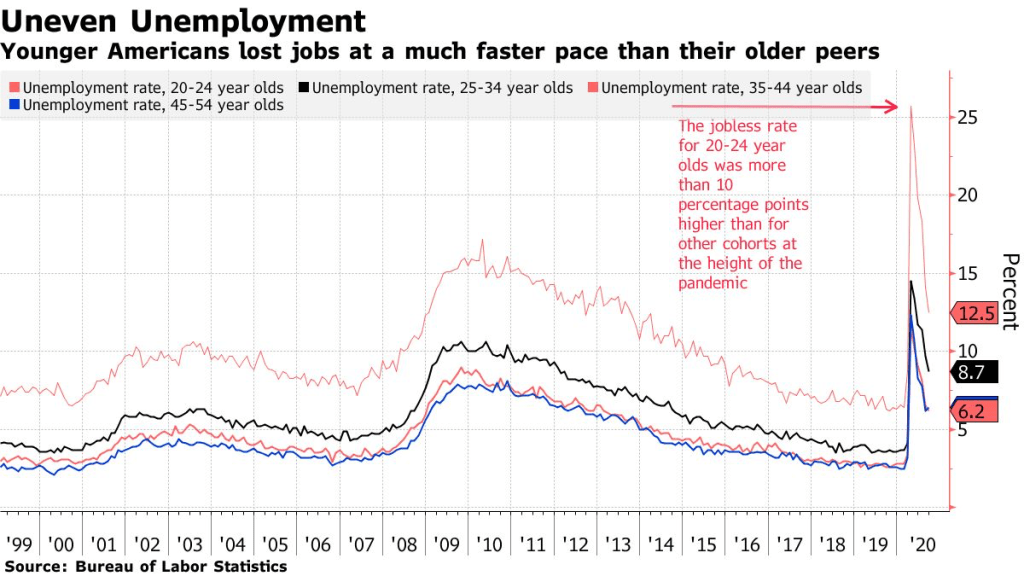
Research has shown that the Millennial and Generation Z’s who have just graduated at the end of 2019, during 2020, or in the next coming years, will be facing high unemployment rates which can affect the U.S. economy in the long-run.

Image via Bloomberg

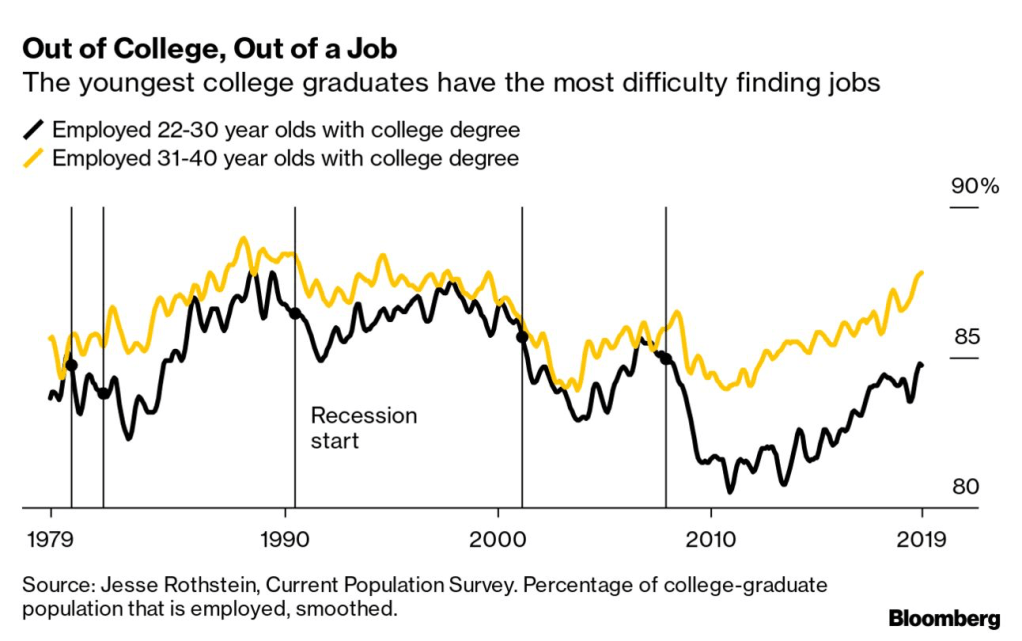
According to Bloomberg, economists say the longer that young people are forced to delay their careers, the worse their prospects will be in the future to hold a job, accumulate wealth, or even get married or start a family.

Long periods of unemployment, or working part-time gigs or temporarily in jobs outside their desired fields, can jeopardize young professionals’ future salary increases and opportunities for them to build key relationships.

For college students and recent graduates, choosing a major based on availability of jobs is a recipe for an unsatisfying life. Instead, search for something you truly enjoy, something you find exciting, and the job will come, in due time.

Image via Shutterstock

Some of you are thinking that graduating in this global health and economic crisis may have delayed your career growth, however it is definitely not a career death sentence. Take as much time as you need to chase your dreams! Everyone you know may be interested in finance, STEM, healthcare, etc. but follow your own roadmap because these paths are certainly not for everybody. It may take you a month, 6 months or 1 year after graduation to find a job amid the pandemic. Many companies have resumed their hiring and have pivoted new ways in doing so. In addition, a lot of companies are hiring workers to work from home as well, which can be a new way of reducing unemployment.


Advice and Tips For Recent Graduates

  • You should definitely continue to explore your interests, values and motivators if you did not spend as much time in the exploration process before your graduation. Through networking and pivoting, chances are you may find roles that weren’t even on your radar and; potential opportunities — that are even better than the ones that you have initially considered.
  • You want to actively connect on LinkedIn with everyone from your college community — students, classmates, recent graduates, professors, mentors, connections from your school internships, career advisors, and career centers! The best chance of success is typically from a referral.
    • Take full advantage of your college career center. Even though you have graduated, you are still part of their alumni network!
    • Take full advantage of employment centers/workforce providers that are located in your area!
      • The services that your college career center and workforce providers (non-profit based) offer are completely FREE in terms of resume critique, mock interviews, career advisement, mentorship, networking help, job placement assistance and referrals, and many more.
  • You want to actively connect on LinkedIn with your outside connections — former colleagues, friends, family members, neighbors! Set up virtual appointments on Zoom, Cisco Webex, Google Meet, Slack, and virtual happy hour, etc. You want to inform everyone that you are currently job searching and let them know what kinds of jobs you are looking for. They may know of someone who is hiring for what you are looking for and they may end up passing along a lead.
  • Do something different and take free courses that will get you out of your comfort zone. Whatever it is that you are doing, traveling, eating, cooking, working with animals/pets, people, your true passion unfolds.
    • If you can’t discover anything you like, you should consider volunteering although nobody likes to work for zero profit. At a time like this, putting your gifts, talents and skills to help a nonprofit organization really helps many folks figure out what their purposes are.
      • This will lead folks to reflect on their passions and realizing how this experience ignites them, as this is a way of connecting them to their future career paths. Not many think of this, however volunteer experience actually offers you the opportunity to lead, grow and evolve as an individual — whether it is impacting the lives of young people, helping the less fortunate or patients/elderly, will allow you to continue to pave your way forward.
      • Also, volunteer work opens many doors for you! There are individuals that I know who have volunteered throughout their whole life, which has led them into their current leadership roles.
  • Keep in mind that there are many companies that have IT, finance, project management, HR, marketing, public relations, etc. Just because the sector/industry for that position isn’t what you are ideally looking for, this is a good time to still apply to that potential employer. The point is to not overlook them!

We all know that 2020 is undoubtedly a financial and emotional struggle for many college graduates. Many students are struggling to find employment and has also lost their jobs due to the pandemic. This has increased financial stress for students who are paying bills; financially helping their parents/family; paying for their tuition (which resulted in 68% returning to their home, 22% staying off campus, 7% staying on campus, 3% went elsewhere), etc.

According to Student Loan Hero:

However, do not be afraid to ask for help. If you feel that you are struggling with food and housing insecurity, paying for online classes, paying your rent, there are many resources to help you. You may want to look into Supplemental Nutrition Assistance Program (SNAP), Unemployment Insurance and Emergency Financial Aid.


Additional Resources for NYC and U.S. Residents

  • If you live in the NYC area, there are free meals where meals can be picked up at all Meal Hubs 9:00am to 12:00pm, Monday through Friday. Meal Hubs will operate for children, families and adults.
  • If you live in the NYC area and you, or a friend or family member has a small business that has been impacted by COVID-19, they may want to seek assistance and guidance from NYC Small Business Services. You may apply for emergency loans, like the Paycheck Protection Program as well as requesting financing assistance.

How to Job Search in a Virtual World

Image via FlexJobs

Current Environment – Mitigating Factors

  • State mandates businesses to close physical locations except for essential workers
  • School systems continue remote learning
  • Childcare options have become more limited
  • Lack of vaccine
  • Social unrest

Current Environment – Impact

  • Businesses announce continuation of virtual work until at least early or mid 2021
  • Candidate demand for flexible work/locations
  • Businesses supporting flexible work/locations
  • Introduction of online training
  • Push for diversity and inclusion

First, begin your self-assessment. Ask yourself, “Where can I seek for opportunities where I can use my interests, motivations and skills?”

Begin building your LinkedIn profile if you have not done so already.

Update Your Resume!

  • Be succinct and concise – limit to two pages, 10 pt font and ½ inch margins.
  • Keep formatting simple.
  • Use bullets rather than narrative.
  • List your education and employment in chronological order, starting with the most recent.
  • Use action words to describe your experience.
  • Objectives, references and interests are not required.
  • Be factual.
  • Proofread!

Creating a Network

  • Utilize LinkedIn and LinkedIn Groups to build contacts.
  • Leverage neighbors, organizations, friends, family, former classmates and co-workers.
  • Focus on people you are already connected to or ask for a connection.
  • Focus on email and LinkedIn InMail messages to reach out — avoid the phone.
  • Send notes within 24 hours of meeting someone new.
  • Plan virtual coffees/lunches.

Searching Effectively and Job Search Tools

Leveraging Indeed

  • Set up job searches with key terms and check daily.
  • Post your resume.
  • Utilize filters including remote jobs.
  • Check reviews.

Leveraging LinkedIn

  • Edit your settings for the most opportunities to be contacted.
  • Set up job alerts for the types of roles you are seeking.
  • Check who you know at a particular company who may be able to provide insight.
  • Join groups.

Leveraging Glassdoor

  • Research information about companies including employees and former employees views on management and culture.
  • Research information about a company’s interview process.
  • Search for positions (on main page or company page).
  • Set up job alerts.
  • Create profile and upload resume.

Leveraging Specialized Boards

  • Dice
  • Career Builder
  • Associations such as Society for Human Resource Management (SHRM), National Association of Black Accountants (NABA), American Bar Association (ABA)
  • College Alumni Networks
  • Industry Groups such as National African American Insurance Association (NAAIA), American Finance Association (AFA)

Closing the Deal (Personal Branding)

Interview Tips

  • Be prepared for common interview questions.
  • Traditional questions focus on education, qualifications, and experiences. Behavioral questions focus on a structured pattern of open-ended questions designed to determine which skills candidates have used successfully in prior positions.
  • Focus on the kinds of questions that will be asked. Identify key requirements and competencies in job postings and compare these to your background and highlight all matches. Determine the experiences you will cite as examples ensuring that your stories are complete.
  • Practice your responses – write it down, say it out aloud, ask a trusted friend.
  • Utilize your network to gain additional information.
  • Imagine and relive your successes for several days before the interview.

How To Reduce Your Chances of Being Laid Off

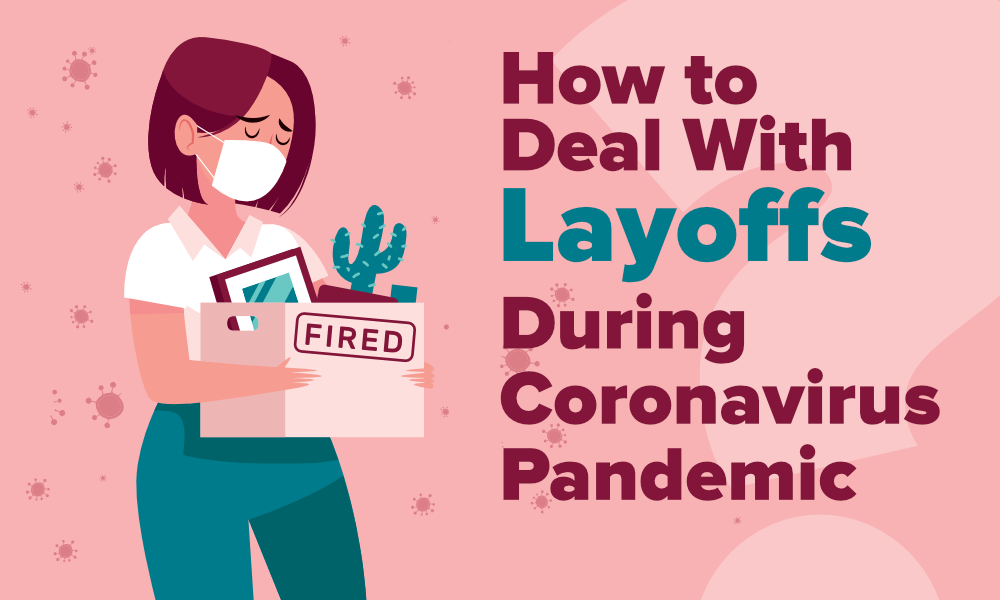
Some have inquired about how they can avoid or protect themselves from being laid off in the future, or seeking a career that would be recession-proof. This can be a scary thing especially for folks who are employed with a company that offers no stability, no perks and no advancement opportunities.. and even companies who are at risk of laying off their employees right now due to the global recession. During a time of uncertainty, this is very tough because nobody is immune to this.

Image via GeeksforGeeks
Check out their article. They have excellent tips on how to manage layoffs as well!

In this case, half of the world is unemployed due to unwanted situations of COVID-19: temporary furloughs which in many cases, leads to permanent furloughs and massive layoffs over the span of 2-3 months since the pandemic.

So, for those of you who are currently employed, take a moment to appreciate the job/career that you have. Appreciate your contributions. Appreciate your colleagues. Be thankful for what you have and what you receive. Many of us do not take the time to think about this, however the job that you are currently employed at, gives back to you in many ways. Of course, income is one of them. But think about the things you are receiving at the moment: paid time off, health insurance, blended benefits, experiential rewards. The list goes on.. There is always something to be thankful for.

Sometimes, layoffs are hard to avoid (due to organizational restructuring, business downsizing, a pandemic, etc), however the list of advice below are ways you can prevent or protect yourself to lower the odds.

  • You should hone or learn a new, unique skill that will set you apart from others in the applicant pool. Put a plan in place to gain those new skills. List the skills that you want to learn.
  • Make an effort to educate yourself on all aspects of your employer. During these strenuous economic times, it is likely possible that you may be asked to take on additional tasks of other employees – which can be something that you may be under qualified / overqualified for, let alone something that you do not feel comfortable in taking on.
    • Show that positive demeanor, no matter how hard it can get – because in the long run, this behavior will yield good results. Employers will most likely remember those who assisted them through these arduous times.
    • When you are knowledgeable of all aspects of your employer, this shows that you are more exposed to different projects and learning about what other teams are doing. If you make the effort to engage in team meetings, inquiring to collaborate and assist colleagues with project deadlines that they are struggling to meet, this will convince the employer that you are a valuable asset to them – leading them to reconsider their decision in letting you go. You already have built a strong bond with the employer and they will have a difficult time in letting you go.
      • Do not slack off just because you have received a positive performance review or an appraisal from your boss/supervisor.
      • Take an extra mile and do more than just the responsibilities that are being assigned to you. Deliver great results. Understand the contribution that you make. This is key to becoming a superstar in your workplace. Employers want irreplaceable employees.
      • Put your skills into use and take ownership. Acknowledge how you are viewed and reevaluate what your reputation is. Instead of focusing on day-to-day and short-term goals of the job, start thinking of long-term goals and how you can demonstrate your leadership to your employer.
        • How can I improve the financial health of the business?
        • How can I build a lasting legacy?
        • How can I increase more traffic?
        • What new strategies or tools can I implement to market my employer?
        • Any new products or services I can add to the employer’s existing offerings?
        • Are there ways I can increase productivity?
        • What are some of the best practices to increase market share online?
  • If you are a job seeker who is seeking employment during this suffering economy, make sure that you are researching on the fastest growing companies. If you are located in the New York City area, you may find this helpful: 100 Fastest Growing Companies in New York City in 2020. Don’t let the unemployment numbers fool you, as the labor market is more competitive now than it ever was before due to the high number of job seekers and less job openings.
  • Stay in touch with your network on LinkedIn and reconnect with your existing connections – such as your former bosses/supervisors/colleagues, employment advisors! Do so in a meaningful way where they can speak favorably and highly of you. With this, you will have more people to speak with, as well as keeping you in the loop of any potential opportunities that can reduce your chances of being laid off.
  • If the employer you are working for is at risk of laying off their workers or filing a bankruptcy chapter, you might want to put yourself in your boss’s shoes. Seek ways and methods to help your employer reduce costs, increase revenues, etc.

How To Get Past The Applicant Tracking System (ATS)

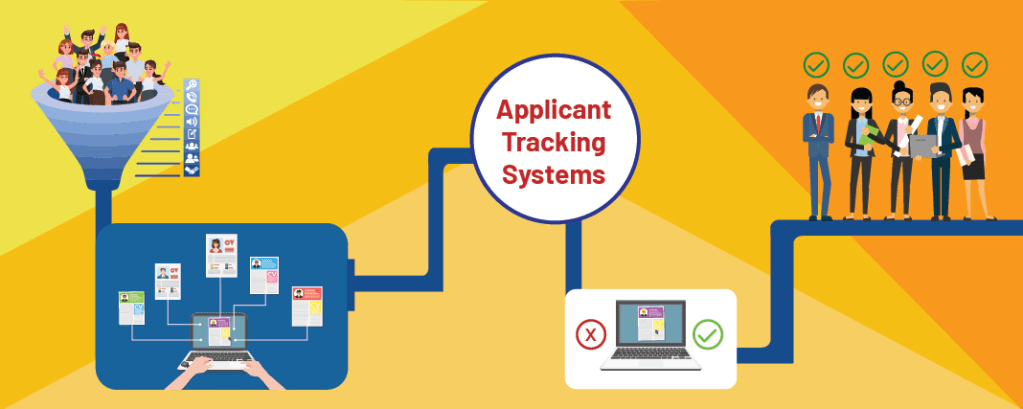
Image via TalSuite

I am sure many of you are aware of what an Applicant Tracking System (ATS) is, since all job applications are required to be submitted online. Back then, job seekers had it way easier. They just had to rely on the newspaper and telephone, and they will be asked by the employer to come in for an interview. However, they have since, revolutionized the hiring process and the labor market in a blink of an eye.

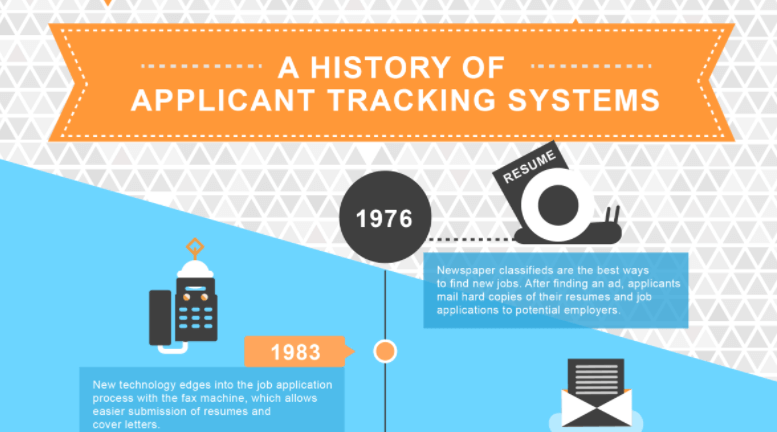
Image via Jobscan
To find out more about how Applicant Tracking Systems have evolved, their article gives useful facts on their infographic.

An ATS is basically a robot that is programmed to pre-screen the applicant’s resume before the hiring team gets a chance to lay their eyes on them. Obviously, it is not as intelligent as humans are, since it is pre-programmed to do what it has to do.

The ATS is programmed to scan for specific keywords that the employer has entered into the system. Some resumes will only be selected to move on to the next step, based on the keywords that the employer has configured. Many employers use the ATS as a way to screen out candidates by asking knockout questions. This is a way to determine which candidates are able/willing or unable/unwilling to perform a job function. For instance, if an ATS is programmed to eliminate resumes that do not hold a Bachelor’s Degree, then those with an Associate’s Degree will definitely not be considered. Here are more examples of the types of knockout questions to look out for when applying on an online portal/job board.

The ATS has simplified the hiring process for employers, since 75% of recruiters and talent managers use some form of recruiting or applicant tracking software; according to Capterra.

On the other hand, causing it to be opposite for job seekers – the ATS makes their job search process more challenging and stressful as they have to pay close attention to every little detail. According to Mashable, nearly 80% described their job search as time-consuming and stressful, and many reported that they would be deterred from completing an application if they encountered tech hurdles (60%), couldn’t upload their resume (55%), couldn’t follow up on the application’s status (44%) or couldn’t complete the application on a mobile device (20%).

The nitty-gritty of getting past the ATS is to analyze and study the job description and keywords carefully as you tailor your resume to what they are looking for. Many job applicants tend to just submit their resume without tweaking their resume to the positions that they are applying for. Always make sure your resume matches the job description and that it has the exact keywords listed.

Note: The ATS is unable to distinguish the difference between the terms CPA and Certified Public Accountant, it is always more safe to list the whole word out instead of abbreviating or shortening it.

Note: Make sure your resume font and format is simple, organized and consistent. If a resume looks too fancy and abstract with colors, images, symbols and other unnecessary stuff, the ATS may count it as unqualified and will move on to the next resume. According to Forbes, studies have shown that up to 75% of qualified applicants are rejected by ATS programs because they can’t be read. You don’t want to be one of the 75%.


DO’s

  • Keep your font simple. Use Times New Roman, Calibri, Arial or any font that looks “appropriate” and “legible”. Make sure the size font is between 10-12. No bigger, no smaller.
  • Use simple bullet points like the one I am using at the moment or even a dash (-) works as well. Just make sure it isn’t a special kind of symbol because that can program the ATS to view your resume as “unqualified” and you don’t want to jeopardize a qualified resume just because of an unrecognizable symbol.
  • Consistent formatting. This is important to ensure that your resume will pass an ATS, so that it would not confuse the system.
    • Margin Size: 1 inch
    • Left Alignment is the way to go because that is the standard way of reading. Don’t center it or align it to the right. Definitely, do not include text boxes. I’ve seen some job seekers do that. This will just confuse the ATS. If we all read from left to right, that is how the ATS will be programmed to read it as well.
    • Length: Keep it minimum at 1 page and maximum at 2 pages. Remember, make sure it has the included keywords and is visually appealing to the employer! You are not writing a Curriculum Vitae. Unless you are applying for a profession that you have had years of experience in and highlighting publications that are linked to the work you do, (i.e., college professor), there is no need to go past 2 pages with irrelevant experience. Know how to distinguish the difference between a resume and a curriculum vitae.
    • Font: As mentioned in the first bullet point.
  • Your resume should aim towards the specific position. Like I have mentioned earlier, read and study the job descriptions. Always always always, keep a look out for specific keywords whether it is in the required qualifications or preferred qualifications that involves your education, competencies/skill sets, licenses, trainings and experience.
  • Do your research on the employer! Make sure you are always tweaking your resume based on their mission, goals and culture.
    • How can you be of value to them? How does your experience, education, skill sets match the employer’s needs of the role?
  • Make sure your section headers are simple: “Objective”/”Professional Summary”, “Skills”, “Certifications/Licenses”, “Work History”/”Experience”, “Education”

DON’Ts

  • Unless you are a graphic designer, avoid including images, graphics, tables/charts, special fonts or unrecognizable symbols. The ATS is programmed to read simple and straightforward things.
  • As mentioned in the DO’s section, section headers are preferred to be simple rather than overdone. An ATS will not understand “Where I Attended School”. So leave it as “Education”.
  • Do not misuse keywords. Use them where you see fit.
  • So many job seekers that I have assisted often put on the bottom of their resume, “References Available Upon Request”. This consumes space and employers obviously know that if needed, they will contact you for it.
  • Select the right file type for your resume. To play it safe, upload your resume as a .doc, .docx or .pdf file. These are the most common and preferred formats. It just looks more appealing to employers as well.
    • Please avoid using specialty formats such as .dot, .dotx, .rtf, .txt, .htm, .docm, .dotm, .xml, .mht because not only are employers unable to access the file, but many ATS can’t read them.
  • Categorize your section headers carefully.
    • If the employer is seeking specific skills (pro tip: when they list the requirements/qualifications, pay attention to those on the top as those are what they looking for in a candidate the most) and you have that, you may want to shift your skills section to the top while leaving your experience and education to the bottom.
    • If the employer is seeking 5+ years in talent management and you’ve been a talent lead or in the HR team for over a decade, you may want to put your experience first and highlight those relevant skills as you go along.
  • Never list your job duties using other terms other than action verbs!
  • When listing out your experience, make sure you do not include the word “I”. It should always be in third person as if you are the narrator of your resume.

Still need more career and resume advice on how to tackle the ATS and ensure that you land your dream job/career? Check out TopResume’s useful article and their informative infographic about ATS.