
The Remote Work World For The Younger Generations

Image via Pinterest

Now that working from home is a safety measure for the nation, this is a good time to scale tools, resources and people. It is an opportunity to have good, quality work done versus policing when and where. Of course, this cannot be done in all sectors/industries but wherever possible, it should be considered.

This is the time to figure out how everyone, not just future generations but also older generations, experienced and inexperienced can thrive in this rapidly changing labor market. The economy is becoming flatter and stagnant, so that will account for slower growth in many organizations.

It is immensely challenging for new hires and job seekers to make connections, regardless of age. And this especially applies to folks who are left with increased childcare responsibilities due to COVID-19 mandated school closures. With this new structure of a global online presence, everything has to be scheduled and pre-planned, including opportunities needed to socialize.

Now, how will this affect the Generation Z? Young individuals typically like to socialize and enjoy being around other individuals. However, the remote learning is causing a massive isolation — leaving them feeling stranded and lost with no plans or road map to guide them. We are losing teenagers to increased depression and suicidal rates as this is affecting their mental health.

Generally, it is hard to fathom a majority of individuals at age, to thrive in the “new normal”. We are humans that are wired for connecting/interacting face-to-face. Young individuals are grown into a highly connected and social interactive environment. The fully shifted remote work and learning can create a regimented, limiting experience for all. Feeling less connected may drive self-initiative and self reliance further and faster.

However in a way, Generation Z’s are able to thrive during this time with their digital literacy as they have grown up surrounded by technology which shows that they are capable of and more equipped for remote work, networking and learning.

For 2020 graduates — they might be able to handle this new normal of remote and digital based working, but many do not have jobs yet and are still struggling to find them. But why? Remote work can present so many opportunities and open up roles for those who do not need to be locate in that specific region to work there. However, it seems that many employers are still hiring based on a candidate’s competencies, abilities and talents rather than where they are physically located. This poses a disadvantage for recent grads with limited to no experience, since this limits their options.

A Gen Z student (’97) who has recently graduated from Hunter College, City University of New York on May 2020 says, “Upon my graduation, I recently enrolled into this program called COOP in which it is geared toward finding employment for people, and I have recognized that it is more difficult now to find a job than it might have been before. A lot of places have let their employees go, and/or started hiring freezes as well as promotional freezes. Other than that, you also have the consequence of having to do everything from home and I don’t personally live in the most ideal environment for working from home, as I imagine that this is the same for many others too.”

He argues that this remote work option is affecting him and individuals his age because they are hiring selectively based on experience/skills. “A lot of organizations will recognize that they don’t actually need as much office space as they currently have, so many places will be inclined to keep the WFH model or at least offer it as an alternative. This means you can apply to more jobs now than you might have been able to before since you won’t be limited geographically. However, this also creates more competition for every job seeker out there because we want to take this opportunity to be challenged and learn something new — but the job descriptions say otherwise. It seems like they do not want to welcome this opportunity to recent grads like us.”

The job search process has been increasingly overwhelming and stressful for young generations, however don’t lose motivation, or quit. Job seekers often give up easily. Remember why you started in the first place. Your purpose in life is to find your purpose. Stay patient and trust the journey that you’re taking. You will eventually get a job.


Your age doesn’t matter. It’s your energy and determination.

Cordia Harrington, Founder and CEO of The Bakery Cos

Going forward, employers need to implement new ways to reduce the risk of digital overwhelm and effective onboarding for new hires. They should provide a framework for remote work to help the younger generations adapt to the environment. This has to be taught instead of expecting them to find their own rhythm and process — and to do this, the employer needs to invest in those supportive tools, channels and a structured plan in place to enhance collaboration and communication.

How The COVID-19 Pandemic Will Affect Millennial and Generation Z Job Seekers And What They Should Do

Image via Dribbble

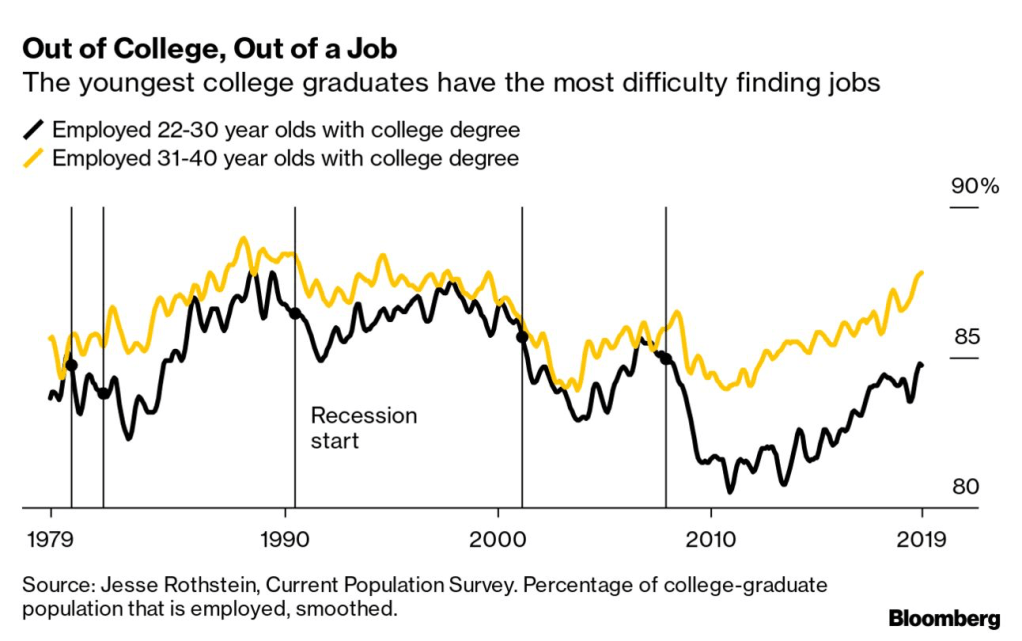
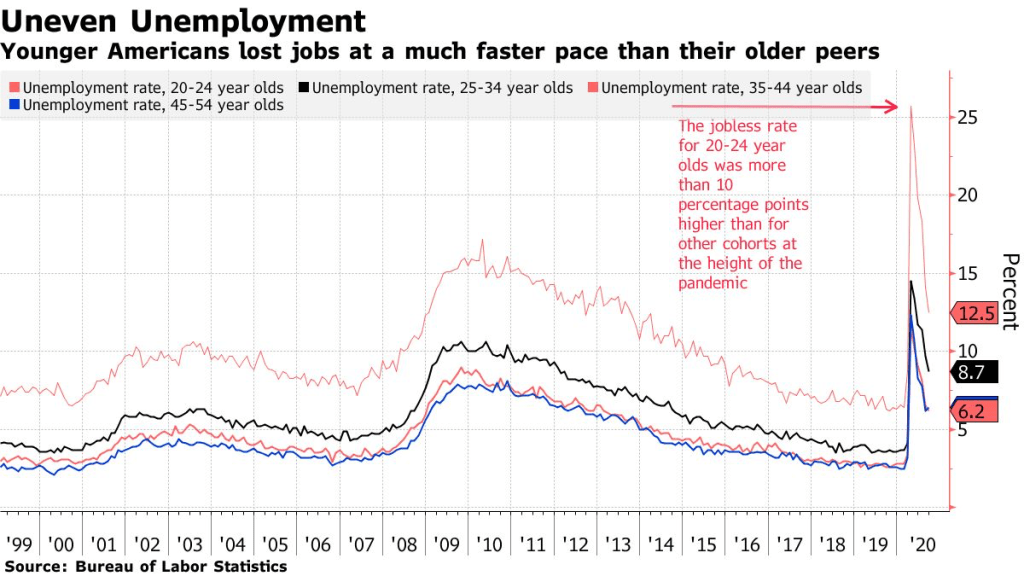
Research has shown that the Millennial and Generation Z’s who have just graduated at the end of 2019, during 2020, or in the next coming years, will be facing high unemployment rates which can affect the U.S. economy in the long-run.

Image via Bloomberg

According to Bloomberg, economists say the longer that young people are forced to delay their careers, the worse their prospects will be in the future to hold a job, accumulate wealth, or even get married or start a family.

Long periods of unemployment, or working part-time gigs or temporarily in jobs outside their desired fields, can jeopardize young professionals’ future salary increases and opportunities for them to build key relationships.

For college students and recent graduates, choosing a major based on availability of jobs is a recipe for an unsatisfying life. Instead, search for something you truly enjoy, something you find exciting, and the job will come, in due time.

Image via Shutterstock

Some of you are thinking that graduating in this global health and economic crisis may have delayed your career growth, however it is definitely not a career death sentence. Take as much time as you need to chase your dreams! Everyone you know may be interested in finance, STEM, healthcare, etc. but follow your own roadmap because these paths are certainly not for everybody. It may take you a month, 6 months or 1 year after graduation to find a job amid the pandemic. Many companies have resumed their hiring and have pivoted new ways in doing so. In addition, a lot of companies are hiring workers to work from home as well, which can be a new way of reducing unemployment.


Advice and Tips For Recent Graduates

  • You should definitely continue to explore your interests, values and motivators if you did not spend as much time in the exploration process before your graduation. Through networking and pivoting, chances are you may find roles that weren’t even on your radar and; potential opportunities — that are even better than the ones that you have initially considered.
  • You want to actively connect on LinkedIn with everyone from your college community — students, classmates, recent graduates, professors, mentors, connections from your school internships, career advisors, and career centers! The best chance of success is typically from a referral.
    • Take full advantage of your college career center. Even though you have graduated, you are still part of their alumni network!
    • Take full advantage of employment centers/workforce providers that are located in your area!
      • The services that your college career center and workforce providers (non-profit based) offer are completely FREE in terms of resume critique, mock interviews, career advisement, mentorship, networking help, job placement assistance and referrals, and many more.
  • You want to actively connect on LinkedIn with your outside connections — former colleagues, friends, family members, neighbors! Set up virtual appointments on Zoom, Cisco Webex, Google Meet, Slack, and virtual happy hour, etc. You want to inform everyone that you are currently job searching and let them know what kinds of jobs you are looking for. They may know of someone who is hiring for what you are looking for and they may end up passing along a lead.
  • Do something different and take free courses that will get you out of your comfort zone. Whatever it is that you are doing, traveling, eating, cooking, working with animals/pets, people, your true passion unfolds.
    • If you can’t discover anything you like, you should consider volunteering although nobody likes to work for zero profit. At a time like this, putting your gifts, talents and skills to help a nonprofit organization really helps many folks figure out what their purposes are.
      • This will lead folks to reflect on their passions and realizing how this experience ignites them, as this is a way of connecting them to their future career paths. Not many think of this, however volunteer experience actually offers you the opportunity to lead, grow and evolve as an individual — whether it is impacting the lives of young people, helping the less fortunate or patients/elderly, will allow you to continue to pave your way forward.
      • Also, volunteer work opens many doors for you! There are individuals that I know who have volunteered throughout their whole life, which has led them into their current leadership roles.
  • Keep in mind that there are many companies that have IT, finance, project management, HR, marketing, public relations, etc. Just because the sector/industry for that position isn’t what you are ideally looking for, this is a good time to still apply to that potential employer. The point is to not overlook them!

We all know that 2020 is undoubtedly a financial and emotional struggle for many college graduates. Many students are struggling to find employment and has also lost their jobs due to the pandemic. This has increased financial stress for students who are paying bills; financially helping their parents/family; paying for their tuition (which resulted in 68% returning to their home, 22% staying off campus, 7% staying on campus, 3% went elsewhere), etc.

According to Student Loan Hero:

However, do not be afraid to ask for help. If you feel that you are struggling with food and housing insecurity, paying for online classes, paying your rent, there are many resources to help you. You may want to look into Supplemental Nutrition Assistance Program (SNAP), Unemployment Insurance and Emergency Financial Aid.


Additional Resources for NYC and U.S. Residents

  • If you live in the NYC area, there are free meals where meals can be picked up at all Meal Hubs 9:00am to 12:00pm, Monday through Friday. Meal Hubs will operate for children, families and adults.
  • If you live in the NYC area and you, or a friend or family member has a small business that has been impacted by COVID-19, they may want to seek assistance and guidance from NYC Small Business Services. You may apply for emergency loans, like the Paycheck Protection Program as well as requesting financing assistance.

The Pros and Cons of Permanently Working Remotely For Corporate/Tech Industries

Image via RescueTime

In this rapidly changing job market today, it seems that salaries are gravitating downwards due to the flexibility of allowing employees to work from home in the corporate world and tech industry. And with COVID-19 layoffs, this global pandemic has put downward pressure on pay.

Employees from software giants such as Microsoft, Facebook, Google and Twitter — were given the option to work freely from home forever, even when their offices open back up.

With this new Work From Home/Remote standard, employers have the freedom to hire from any geographic location that they desire to. This will heavily affect areas with high costs of living because they will not account for higher salaries. Basically, compensation will change drastically depending on where you live in the country as they will do regionally-based salaries. We can see that this is already impacting the tech industry, which will generate an approach to more supply because it opens up the competition significantly. In the long run, this method of compensation will drive down employee salaries. This will also result in mass migration because people will no longer be tied down to living where they work. If you think about it, working remotely versus going into an office will not only impact the salary, but also promotions and growth.

For example, companies in the Silicon Valley are lowering the salaries of employees based on where they relocate.

“Even a move within the state of California will result in lower pay: workers who decamp for San Diego or Los Angeles will take an 8% pay cut”, Bloomberg reports.

Business Insider

Many tech firms are cutting labor costs for employees who move to less expensive areas. This isn’t fair for other employees who get paid less for carrying the same job title and performing the same amount of work. This is where the cost of living brings out the factors for these companies. The factors of the economic principles of supply and demand come into play.


Pro #1. The employers that are incentivizing this “WFH permanently” option, are widening their talent pool within their area – which can be great for folks who are highly talented. So therefore, the ability for an employer to hire at a lower cost due to the larger talent pool might compress the wage for that particular position, but if it allows the candidate to apply and potentially earn that position at a salary that is higher than what’s available in their current geographic labor market, then their respective salary has increased. Let’s not forget that WFH is not a mandatory thing for everyone. This is optional as there is still people who still prefers to go to back to their workplace and cubicles.

Pro #2. WFH offers more flexibility. WFH if you want, come in if you want. As long as you get the work done, your company will benefit from happier employees, wider talent net, smaller buildings and so on. For some folks, they may have a dedicated office space in their home or studio where it makes them feel much more productive as it has given them greater freedom to have a healthier lifestyle with less stress, and to be able to take care of their children.

Pro #3. WFH also improves ecology and prevents the contamination of the spread that’s still going around. Yes, it is nice to have an opportunity to work from home as this reduces carbon footprint! This reduces time in the traffic as there will be less cars on the road, and you won’t have to feel dreadful about waking up early. Not having to commute or paying for a $20 lunch meal daily, saves you a lot. Working from home is a great idea for both employees and employers who can save on their biggest expense, which is real estate and payroll.

Pro #4. This is a big step to reduce unemployment. Think about certain populations who have been out of the workforce for so long. For example, there are individuals who have disabilities or chronic health issues that limit their work options. And individuals who had to take care of their children because they do not have anyone else to look after them. But they are ready to enter the working world again and are still in search of employment. If they have the skills to do so, all they need is to set up their dedicated work space and equipment at home. With an unemployment rate of 8.4%, there are far more potential workers who are available to bring their valuable assets to the right employer.

However, it is not possible to fully live without the face-to-face interactions. As the world and labor trends continue to change and adapt, this brings us to the cons.


Con #1. If employers are extending offers to anyone in the country versus the local area, the demand for talent may decrease. This is a huge disadvantage for job seekers that lack digital skills. Fewer and fewer opportunities are available to those lacking a baseline of technology access as well. Studies also show that for many employers, working from home from time to time will likely continue as the new normal once the pandemic subsides.

Con #2. This is something that nobody has ever thought about, but employers would need to consider the time zone difference if conference calls/team meetings/client calls are needed. This can result in burnouts since there is no micromanagement. So the key variable here is engagement, where employees should feel supported and valued even behind the screen. Leaders would need to be willing to invest in software and hardware to make it work and build realistic protocols and accountability measures to ensure the work is being done. And this would require change in the design of workflow, teams and functions, as well as clear communication of expectations.

Con #3. In the long run, this can negatively affect some of the younger generations who are beginning their careers as some are visual learners. If they do not get to interact with their team or colleagues, this can limit their development since they won’t have the opportunities to learn from others on a daily basis. We need the face-to-face interactions to stimulate our communication with both internal teams and with our clients.

Con #4. Many employees (support staff, office admin staff, security staff, transport staff, etc.) who can’t work from home will lose their employment. This goes for jobs in the hardest hit sectors (hospitality/retail) — they are becoming obsolete, such as administrative assistants, receptionists, sales associates, etc. And, what will happen to the office space once that is all gone?

Con #5. Concerns have also been raised about work/life balance — where working from home only works if your environment is adapted. In other words, not all folks live in a place that is suitable for working from home. For instance, not everyone will have access to good WiFi, office supplies, ink, technology, etc. How many companies are willing to cover for that? And if they do cover that, how are they going to pay for all of their employees? Stipends?

Con #6. Mental health. An employee’s health matters too to ensuring a productive workforce! If employees do not make time for their wellness, they will be forced to make time for their illness. It’s true. This is a hot topic that has been discussed since the beginning of the lock down because many employees prefer office interactions and collaborations. We are humans. We develop the positive energy from being around people and the relationships/interactions are definitely not the same when working from home. In many cases, in-person discussions make a bigger difference and building solid relationships is more effective when done face-to-face.

Con #7. As you draw the big picture in your head about living situations when permanently working from home, some individuals will have the idea of selling their current property just to move back to be with their families because they will save more costs on rent, utilities, electricity, gas, etc. It is a nice recourse that many of these employers are offering, however things may/will always change. What if the employer reverts their decision and decides to make their employees come in to the office permanently? Or for a specific project/collaboration? This could be a logistical disorder for some individuals who are affected by their living situations. Not many folks are willing to pay an arm and a leg to live in areas that they cannot afford.


All in all, existing gaps between the haves and have not’s may be further heightened and it’s not hard to imagine folks being passed up for positions just because they simply don’t have the infrastructure to work from home and prefer working in the office instead. This pandemic is going to have far reaching impacts to many of our cities. But also, in a positive way in that here is an opportunity to close the wage gap between have and have not’s.

The Importance of Compensation Components

Image via Lynda

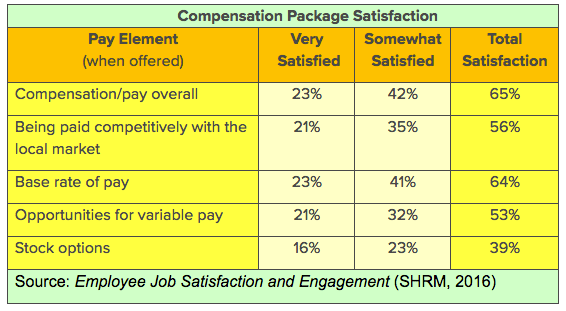
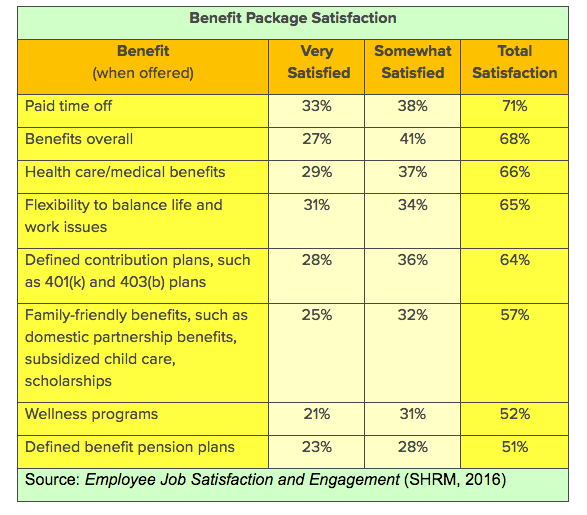
Compensation and benefits are one of the most important components in the workplace. The significance of this leads to better retention rates within the company. In a career standpoint, better pay and better benefits leads to job satisfaction.

However, many employers shy away from compensation and benefits and this topic should be discussed more comfortably and freely between the hiring manager and the employee. Smart employers know that keeping quality employees requires providing the right compensation and benefits package. Compensation includes wages, salaries, bonuses and commission structures. Employers shouldn’t ignore the benefits portion of employee compensation and benefits, because the benefits sweeten employment contracts with the priorities that most employees need.


Top talent may soon be looking elsewhere for opportunities if they do not feel like they are being adequately rewarded.

Christina Lee, SHRM’s researcher for total rewards strategies and project leader of the Employee Job Satisfaction and Engagement (SHRM, 2016) Report

According to Small Business’ resources of Chron, the right compensation and benefits in the workplace results in:

  • Attracting Top Talent
  • Increased Employee Motivation
  • Boost in Employee Loyalty
  • Increased Productivity and Profitability
  • Job Satisfaction So People Stay

There are 4 elements of performance pay:

Image via SHRM
Image via SHRM

Below are some discussion points that global leaders from HR and Talent Acquisition have highlighted, that folks can gain insight from:

  1. Tuition reimbursement for employees and those who have children, plays a huge role in performance pay. Not all employers are willing to provide this benefit because not all have the budget or funding to do so, especially for non-profits. However, this is a huge asset and also a good way to support employee loyalty and retention because this can help their employees continue to further their education in obtaining the necessary knowledge/credentials that can help sharpen their skills while they are performing at their current job.
    Gym membership is also another link to performance pay because in NYC, everyone I am associated with – prioritizes gym and exercise usually before or after work. Finances can one of the main barriers to health for some employees so I think that this can be a barrier that can be removed by allocating employees with that membership as a benefit.
    • Tuition reimbursement is such a draw. I have found that it’s one of the benefits that people like having access to even if they do not ultimately use it.
    • Staying physically fit can fix a host of health issues and keep the cost of health insurance down so it could be a wash or even a cost savings.
  2. Tuition reimbursement is a valuable benefit for both the employee and the employer. The employee has an opportunity to advance and develop their skills while the employee gets the benefit of having a more skilled and potentially more productive employee. This benefit and companies who offer this benefit have shown to produce more highly skilled staff as well as savings on retention, recruitment and turnover. Both the smoking cessation and gym benefits has an impact on performance. Healthier employees are often more productive and statistically spend less time on sick leave. This is an obvious and direct benefit for the employee and an more indirect benefit for the employer.
    • Particularly about tuition, smoking cessation and gym benefits being a benefit to both the individual and the company: Too often they are viewed as a benefit to the employee, but reduced sick time and higher productivity definitely help the company. 
  3. Tuition Reimbursement for Children – Considering the cost of education in Switzerland and the impact on a family spending and quality of life,  then the fact for an organisation to cover fully or partly the school tuition fee for kids will be as a very competitive benefit.
    Quality of CoworkersNowadays more and more employees are seeking for great place to work. Therefore the ranking and selection from future employees to join and current ones to remain, will start  to look or connect with the quality of staff behaviour, skills as much as the  overall in-house work life style and atmosphere.  It is unconsciously the more empowering and rewarding benefit to have and clearly links to much better performance pay than children tuition refund. It is not always about money but rather about sustainable and positive mental health.
  4. The value of job titles should align with performance of expectations set by the company. Addressing job performance is a very common way that leaderships evaluate a candidate on whether they are the right fit for a change in job title or a promotional increase. Having the opportunity to be assigned new job titles is an experiential benefit in the sense that is is an example of recognition, but it also can be part of direct compensation if this job title comes with different pay. Different employees have different values at different times of their lives. If we have an employee who has a strong work value and looks at companies as who the most competitive is and offers the most opportunity for growth, then this employee may put a heavy focus on the value of the job titles when reviewing the benefits of working for one company over another.
    The quality of coworkers can very much so be related to performance pay. Your immediate coworkers may be the people you spend the majority of your work week with. You trust them to get their responsibilities done, to assist you when you need help, to give you feedback and to make the workplace enjoyable. We risk losing good top performers if they don’t feel that connection or value their coworkers. I include managers in this as well. I think a lot of us have heard the phrase “I didn’t quit the job, I quit the manager.” Hearing this from an employee who is leaving the company is very difficult. We have to look at both sides to wonder if the right leader is in place or if this was extenuating circumstances with just this employee. If we don’t have a strong enough leader in the role, we risk the culture being ruined and losing people to competitors who have a better system of finding and placing management. Employees who feel supported, comfortable in talking to their managers and coworkers and seeking help will perform much better without the added stress or insecurity of failing. I think this can be tied into the value of a job title as well. Employees may not only value their own title and the opportunity to grow in title, but they may value the title of their coworkers and managers too. If they feel that a title is too senior or superior related to the behaviors a coworker or manager is displaying, there could be some tension and frustration. I may even argue that the health of the team engagement has one of the biggest impacts on production and performance. We can get honest and true feedback when the the team quality is high. We have people who are qualified for their positions, mutual respect for each other’s job functions and responsibilities and feelings of genuine interest in succeeding. Without a high quality team we run the risk of passive aggressive interactions, office politics, distrust of management and feedback and defense mechanisms to protect our workloads and our emotional well-being.
  5. Tuition reimbursement and gym reimbursement are the ones that stand out to me.  These two are great ways to create an incentive for employees to be productive and also to create a comparative advantage if you are hiring employees with higher education or those with certain certificates to show and/or improve their skill set to keep the talent in house. I also believe that gym reimbursement would encourage a healthier workforce if it’s included as part of the wellness package offered by an organization. Providing gym reimbursement programs could help to link better pay for performance conversations and motivation. Ensuring employees are taking care of their physical health but it also is a great tool to support emotional wellness. If people look and feel good they will produce better results.
  6. Tuition reimbursement for employees is definitely a value added benefit from an organization perspective. This is a common benefit which we have seen in the larger organization, however the medium / small firms do not provide such offers to employees. This kind of benefit helps employees in developing their skills which will help the org to get higher productivity with better revenue / margin from these employees.
    Tuition fee reimbursement for children is most useful for employees in the mid-level of the organizational hierarchy where attrition is the strongest. It can be used as a strong motivation factor to retain talented employees as it also encourages employees to put their children to good schools, which they wouldn’t have been able to afford previously.
    Advancement opportunities motivates employees to choose and certify in the area of their interest. Through this, the organization can drive a culture of learning and innovation. It indirectly opens opportunities for internal job movements and job rotations. When employees are given this sort of flexibility, it reduces attrition in the long run.
  7. Having a smoking cessation program allows and encourages motivated employees to get healthier which decreases costs for the employer. Non-smokers may be more productive as they are less likely to take smoke breaks or to be out sick. However, since not everyone smokes, having this type of program only benefits those that currently smoke.
    Quality of coworkers – Almost everyone, regardless of their position, must work with coworkers at some point. Having a respectful and positive relationship with coworkers can make even a mediocre workplace so much better. Alternatively, you could have a great employer and workplace but having a negative coworker can outweigh those pros and can even affect other aspects of your life.
    • Comparing the two areas above, I think quality of coworkers is the better option for linking pay for performance as this is something that would likely affect more employees and would be a great attribute to attract and retain employees.
  8. As a recruiter, one of the most asked questions I receive from potential hires is the Value of Advancement Opportunities. Employees want to know that they have a future with the organization, and that their work will be considered, appreciated, and rewarded with the possibility of advancement. However, I have also noticed that many candidates are not really interested in probing further. They will ask if there is a career path or opportunity to grow, but it feels as if they are ticking the box, that they have asked the question and if they receive a strong sounding “Yes”,  they move on. They don’t probe further nor do they ask about what their individual career plan would look like, what their milestones would have to be.
    I have also held focus group discussions with current employees and have noticed that female employees feel that they don’t have the same opportunities (in our organization) for career advancement in comparison to our male colleagues (for a number of different reasons but especially because they don’t believe they get the right exposure to executive management). Therefore, career advancement opportunities may be a value that is limited to a specific number of employees and not an opportunity that all employees will feel that they have.
    On the other hand, Value of Job Title is a confirmed pay for performance benefit, because it comes at a specific time and possibly with added benefits and a higher direct pay (on all 4 elements of performance pay). Employee satisfaction would be higher, and organizations can ensure that they look at the performance of their female staff and reward it directly with a higher Job Title. Therefore, job titles are a better pay to performance value than a better advancement opportunity.
    • I work with some organizations where job title is not necessarily reflective of job duties and responsibilities, but because they want to keep the incumbent happy they inflate the job title. Many employees link their satisfaction to the job title, which directly affects productivity levels.
  9. Tuition reimbursement for employee plays a major role in performance pay and is a very valuable benefit for both parties. Having the support of your employer to further your education, whether it be additional degrees or a specialized certification, is an excellent benefit for the employee. It also shows the investment the employer is making in you as they want to assist in sharpening your skills and knowledge increasing your value as an asset to the company.
    Gym membership can be viewed as a positive impact for performance. Gym memberships can be costly and deter employees from joining and participating. Helping overcome that financial obstacle as well as instilling a healthy work environment can improve the mental sharpness of the organization increasing productivity.
  10. Advancement opportunities – Opportunities to advance within a company drives progress within employees. If they know there are opportunities for growth within the company they won’t settle for “good enough” instead they will drive to get better and better at what they do so they can advance within the company. 
    Quality of coworkers – When employees enjoy working with others within their company they are less likely to leave the company. This gives the company an advantage over others who may pay better but have less enjoyable work environments. Since turnover is such a high cost, hiring quality employees, even if it takes longer, is of great benefit to the company. 
    Both of these link to pay for performance in similar ways. Employees who are more satisfied with their work environment work harder and stay longer. However, I would argue that having quality coworkers would eventually prove more beneficial to the company over advancement opportunities. The reason for this is because most people under-perform and leave their companies due to the frustration of the overall company culture. Those who lead form the culture but the employees maintain it. Having a healthy group of workers who maintain a great work environment will lead to more success for the company overall and make it more attractive than other companies within similar spheres of work. Which means less turn-over, more quality hires, and quality work throughout the company. Providing greater service and producing greater results. All because people enjoy working where they are, the culture is one of working hard and producing quality results, and the workplace is attractive to other quality employees.   
  11. Onsite daycare – the cost of daycare can be very high in some areas. It can also be challenging for parents to find a facility in which they can trust the people to keep their children safe. Once a daycare is found, parents have to take the time to drop off their children before they go to work and leave work early enough to pick up their children at the end of the day. An onsite daycare cuts down the travel time in both directions, employees can easily pick up their children without losing additional work time and they don’t have any out of pocket costs.
    Advancement opportunities – this is particularly important for people early in their careers. Employees who have career goals typically want to work for a company where they can advance their skills and experience but stay at a company where that growth is rewarded with a promotion or new role. If they can’t get that in their current organization, they will take that knowledge and experience to another company which is a huge loss to their current employer.
    Both of these benefits really tie into the place where someone is in their life. Typically, someone in their 20s or early 30s is most concerned bout getting to a certain place in his/her career before they settle down and start a family. Someone with a family, may be more likely to have achieved a management level or higher role and is looking to maximize their time at work and with their families and may prefer the daycare benefit. The most important thing to consider is what’s important to YOUR group of employees. What is the current demographic and how do you align your benefits strategy to that? As the demographic changes, how do you adapt that to where your employees are in their lives at that point in time.
  12. A huge part of someone’s performance is tied to their mental health, and a huge part of mental health is physical health – gym membership. Gyms and trainers can be incredibly pricey, but if you offer your employees cheaper options, they’re more likely to exercise and, in turn, be even more productive at work. This is something most people would take advantage of in a company, so people would really appreciate this
    onsite daycare, even more so than a gym membership, would do a LOT of employees a lot of good. There are so many people that are kept from corporate jobs because they have children and can’t afford child care. If a company offers child care at their facility, employees can bring their children with them to work and ensure they are safe and taken care of all day, worry free. This will allow them to focus on their job rather than the financial burdens of child care. This is something people would easily accept a job for, all else being equal or even close. Though gym memberships would go a long way, on site child care would be the most powerful thing that a company could offer with regard to pay for performance over time.
  13. Tuition reimbursement for children and quality of coworkers are tied for me. It’s hard to say which of these two would hold more water in linking pay for performance. I think it depends on an individual’s value and may also be influenced by different generations. For example, quality of coworkers might appeal more to Millennial employees, while tuition reimbursement for children may be more of a benefit to Gen X.
  14. Tuition reimbursement for employees is an incentive to promote further education and training, which is why it links to pay for performance. It incorporates the will to improve and strive to become better.
    Advanced job title relates to pay for performance since the title indicates to third parties which responsibility an employee has, and since most people want to live up to expectations held about them, it motivates to fulfill said expectations. Since with an advanced title, usually the salary advances as well, the title can also be seen as blended benefit and not purely experiential one.
  15. Advancement opportunities and onsite daycare are the two components that I would like to pick.
    I believe advancement opportunities offer a more direct co-relation to greater performance as one can be clear that better and greater performance can lead towards career growth and there is scope for the individual to then earn more and as a result improve the overall quality of life.
    Onsite daycare on the other hand is a more here and now benefit, which might not be applicable to all employees and hence has a limited scope in influencing performance of all employees.
  16. Tuition Reimbursement for Employees – Providing this benefit allows employers to develop top performers by ensuring they meet education requirements necessary for a promotion. Hiring within and keeping the talent in-house versus heading to a competitor.
    Gym Membership – Physically active, healthy employees who feel good are more productive, call in sick less, and contribute to a healthier, more positive work environment. 
  17. Tuition Reimbursement for Children. This is a very interesting point on linking it back to performance pay. In Asia overall, education is critical. The view that the child has to surpass the education of their parents is evident. Therefore for an organization that can provide this children tuition reimbursement, will definitely be highly regarded by the local communities in Asia.
    Value of Job Title. Yes, believe it or not, Job Titles are more important that what the job actually entails in some Asian communities. Therefore there had been ways where more higher perceptions on Job Titles are implemented to unlock this, and had been doing well in inducing performance for some organizations including mine. For example, in my organization, we change the title of “Senior Assistant Brand Manager” into “Brand Lead”; no change in job scope. This has then create a huge shift in perception on the job and making the position more attractive. As millennials said “Job Titles are how we want the external society know us, it is important!”, quoted on one of the FGDs about career in my organization.
  18. Advancement opportunity is something that is equally important to the employee and the employer. An employee who is motivated to develop a successful career path within the organization will be committed to the organization and theoretically, perform at a high level and be super productive. An employer will benefit from the employee’s growth within the company, their institutional knowledge that they develop over time, as well as expanded skills and knowledge. Driving this advancement opportunity with performance pay is a clear method to providing this benefit.  
    Second, job title is important to an employee and fits hand in hand with advancement opportunity. There are companies that will promote an employee in title only, and not link performance pay to it, and others that do link it to a salary increase. Job titles are something employees are proud of and wear as a badge (whether the job title change comes with performance pay or not).  However, without real career  advancement tied to that change in title, including things such as additional responsibilities, direct reports, and future opportunities to strive for, the change in title is meaningless.  Therefore, I believe advancement opportunities can be better linked to performance pay.
  19. Value of job title. Employees value their job title when it is meaningful to the position held. Assigning the correct job title to a position is a basic essential task. A job position with the wrong title can lead employers to many problems like pay inequity, loss of morale, turnover, etc. Employees with the incorrect job title can often be frustrated, lower productivity, and lead them to leave for a “better” opportunity. From my personal experience I can share that my company did not have the title “executive assistant”, when I was hired as an Executive Assistant to the VP Operations and Technology I came onboard with 10 years’ experience as such. At that moment, the company decided to grant the job title of ‘Executive Assistant” to all the administrative personnel working for an executive or a director. Overnight, the administrative assistants were suddenly called “executive assistant”.  This change led the administrative assistants to think that they should be earning a much bigger salary than they were. In practice, they were not fulfilling the role of executive assistants, but administrative assistants. As they start to retire or get new career opportunities elsewhere, we have replaced those positions with true to market executive assistants that do fill the position expectations and are paid according to market. I think that there is no other benefit that can be offered that would better link pay to performance than this one. At the end of the day, the correct title will reflect in a more accurate salary benchmark.
    Value of advancement opportunity and tuition reimbursement. I chose to list these two together for a reason. In an era in which long tenured employees are vanishing from the workplace, people do not wait years to advance to the next position in the same company. This alone, creates a whole host of issues and there is a definite need for employers to find creative ways to entire them to stay. Usually employees stay around 2-5 years with a company and get their next opportunity in a different company. It is very important for a company to show to its employees both: a ladder and a way to prepare for their next career step wherever they go. This way of presenting career advancement would lead a company to attract employees that are eager to learn and advance and help them all at the same time (education and promotion).
  20. I think coworker quality is an undervalued component of the workplace. In trying to create a high-performance culture, which is something my organization is working towards, it is important to incentivize the behaviors you want to encourage. For example, in our production departments, we are beginning to incentivize speed and accuracy. We do this by measuring the output of each contributor and developing goals that are tied to incentives. As we set our expectations, a culture of workers who are fast, accurate, and have high attention to detail will begin to emerge because those who cannot meet those expectations will not succeed. Employees who do meet those expectations will begin to hold each other accountable and measure their output against others (as employees are already constantly looking at their own performance in contrast to others). Thus, working alongside others who understand and work toward the high-performance culture will create more job satisfaction and will increase the overall compensation.
    The value of tuition reimbursement could be a great component of pay for performance. Tuition reimbursement could be a benefit offered based on tenure, on sales goals, on overall performance evaluation ratings, or any number of other achievements or competencies. We live in a highly individualistic culture, so rewards based on an individual’s contributions against a benchmark instead of those rated against the performance of others could be a more successful pay for performance model than the standard production output incentives.
  21. Onsite daycare is a very valuable benefit. Especially being a mother myself, I truly believe this can have a great impact on employees. Having to travel across town to take your kids to daycare and try and make it back to work on time can get really stressful. Offering this benefit to your employees really shows an organization’s support for its employees which can then increase employee loyalty. 
    Tuition reimbursement for employees is also a very valuable benefit to offer to employees. I have noticed that not all employees take advantage of this, but I think just having it as a benefit says a lot about a company. My company offers this benefit and it has allowed me to take paid HR courses.
  22. Onsite Daycare – Access to childcare is a major factor for families when considering employment opportunities as well as pay. Having onsite daycare eliminates that worry and may even result in an individual either choosing one company over another OR accepting a lower salary because the convenience of the onsite daycare outweighs the discrepancy in pay. 
    Gym Membership – Gym memberships are definitely linked to performance pay as it is an extra expense a lot of people have every month. If this was something that was paid for by a company as an added benefit it is one less thing that the individual has to pay for and similar to my argument above it may result in someone choosing one company over another OR accepting a lower salary. 
    I think choosing which component is better linked to pay for performance depends on the target audience. For example, if a company was trying to recruit a lot of younger college graduates then the gym membership may be more valuable to them than onsite daycare. Personally, the onsite daycare is more appealing for me because I know the monetary value of daycare is much higher than a gym membership. 

How The Hiring Season is Looking for Logistics, Freight and the Courier and Delivery Services Industry

Image via AuditShipment

For many decades, retail cashiers and sales associates served as a common entry point into the labor market for generations of workers. However, these positions are becoming obsolete due to automated self-checkouts and no requirement of any kind of human interaction. Beginning of the 20th century, the big transformation of technology has caused more than half of the jobs to go automated — causing the labor market to become extremely competitive for candidates, as employers expect a considerable level of technical skills for entry-level to mid-level positions.

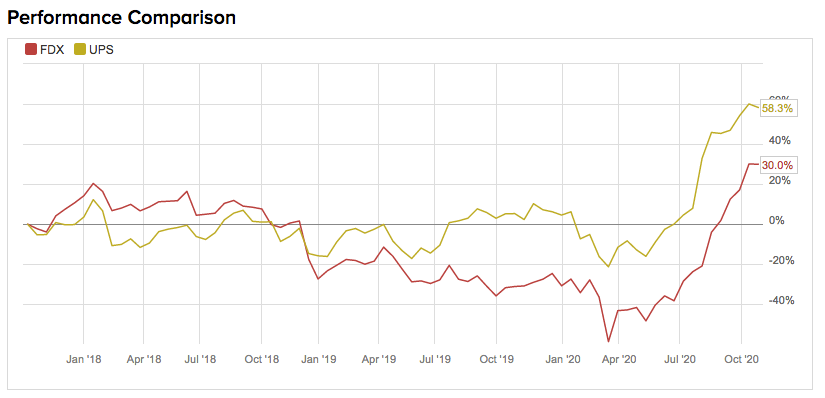
With COVID-19 impacting store closures and bankruptcies in the fashion retail industry, there has been an uptick in the number of online orders and an increase in the U.S. eCommerce spending. This creates an unprecedented demand in hiring for more delivery workers and package handlers at UPS and FedEx in order to speed up the delivery process on millions of orders to consumers — making their services more crucial than it ever was before. COVID will set a new precedent in eCommerce penetration.

UPS is one of the many employers that has been hiring for thousands of workers since the start of the pandemic. They are still currently in good shape as all businesses and consumers drove eCommerce and shipping to a new level. UPS is currently hiring for 100,000 seasonal workers to handle and deliver to meet a surging volume of packages for the upcoming holiday season, with Black Friday, Cyber Monday and Christmas approaching. This includes “extra drivers, driver helpers and package handlers”, according to Business Insider.

“We’re preparing for a record peak holiday season. The COVID-19 pandemic has made our services more important than ever,” said Charlene Thomas, chief human resources officer at UPS. “We plan to hire over 100,000 people for UPS’s seasonal jobs, and anticipate a large number will move into permanent roles after the holidays. At a time when millions of Americans are looking for work, these jobs are an opportunity to start a new career with UPS.”

UPS isn’t the only courier industry hiring for holiday workers. FedEx is as well. They are looking to fill many critical openings that fall under these categories: Package Recovery Agent, Package Handler, Maintenance Tech, Operations Manager, CIL Material Handler, Customs Trade Agent, Forklift Operator, Warehouse Worker and Retail Positions.

If you are still looking for a job and have a driver’s license in your area, you may want to consider applying. Due to the growth of eCommerce and a decline in retail, there is an increased need for workers in the courier and delivery services industry especially during this peak holiday shipping season. UPS, FedEx, and USPS will see package volume soar by up to 70% over last year.

Image via Wall Street Journal

Labor Market Information on UPS and FedEx

via TipRanks
More information on how UPS and FedEx are doing HERE

What To Do If You Are Unsure About Your Career Path

Image via MedCerts

Many students often had this question pondering in their minds about what they should do in their life after graduating from college. Some may have studied or majored in a field that didn’t match their interests or passion, and ended up pivoting their career paths – simply because the jobs or internships that they have worked at, are depressing and unsuitable for them.

On the other hand, older individuals who have been in the same role or sector/industry for many years often want to switch careers due to the following reasons:

  • Lack of professional advancement or career dissatisfaction
    • Job Burnout/Stress
    • Job isn’t suitable for you: Being bored or depressed because of the work you do
    • Loss of interest in that specific field/sector/industry
      • Re-entering the path of self discovery
    • You want to earn more income
    • You want better benefits, perks and rewards
    • Your life has changed because you have to take care of family or an illness so workplace flexibility is a must
    • The job outlook has worsened for your career field

During this uncertain time of the pandemic, it is difficult to imagine what the future of work will look like since anything can change over the course of the next few months. However, it is still crucial to establish personal and professional goals that pave the way to success.

So the big question is, “Where do I begin?” “How do I figure out what I want to do with my life?” As you are discovering what you want to do in life, the way to do it is by shifting your mindset from looking for a job, to achieving a purpose. Remember that sometimes not getting what you want is a wonderful stroke of luck. This is a reminder that what we want isn’t always what will be the best in the long run. You could say you have the passion to become a Mental Health Counselor because you have that kind of personality – compassion, empathy, therapeutic and you just love to talk to people. But you strongly dislike completing the caseloads and paperwork at the end of the session because administrative details aren’t really your forte.

With that being said, a good tip to consider for undergraduates or graduates who are still in school – you want to go behind the scenes in the professional world. In other words, you want to explore different career paths to see what really is your cup of tea. This will then establish your vision and clarity. Know where you want your dreams to take you.

Figure out your call to action. Prioritize what deserves your time, energy and happiness. Face the things that you have always desired to do and achieve. You want to map out a career plan/road map for yourself. What you want to do should align with your core values and strengths. Know and validate your strengths. Think about the jobs that you have worked for and think about what you do in your personal life and during your free time. List the things that you truly enjoy doing; things that bring a smile to your face and boosts your energy. Then list the things that you do not enjoy doing. Also, brainstorm and write down where you see yourself about 5-10 years from now.

You may also want to discover more things along the way. Discover what you don’t like by exploring, traveling, tasting, feeling, experiencing the things that you don’t like. Go out there and be fearless. Do the things that you’re afraid of because who knows, it may turn out to be your hobby/passion.

Another way in evaluating your core values, strengths, weaknesses, interests and skills are to take personality tests or career assessments to see where you want to be. There are numerous free career aptitude assessments that you may want to check out. Career Explorer also offers a free assessment to help you discover your career matches.

Once you have your road map in place, invest your time to hone those skills. Don’t compare yourself to your friends or connections who have landed a full-time role in Microsoft, Google, Facebook with good pay, perks and benefits. They are not you, and you are not them. Instead, you want to learn from them — and what I mean is learn from like-minded individuals — those who already have their life figured out and take advice from those who have what you want. In other words, surround yourself with individuals who are already at the level you want to be or those who possess similar goals who inspire you, motivate and encourage you to achieve your goals. Who you spend time with the most is who you will become. It’s important that you surround yourself with positive individuals — be it your friends, family members or colleagues.
Surround yourself with friends, family members and colleagues who serve as your life mentors; they believe in you even if you don’t believe in yourself. Surround yourself with leaders who will set you up for success by helping you learn, grow and taking your life to a new level!
LinkedIn is also a huge asset during your job search process. Reach out to your contacts on LinkedIn and set the tone. See below for an example.

Hello (Your Connection’s Name),

I hope this message finds you well. My name is (Your Name) and I decided to reach out to you since your background really stood out to me. I am interested in seeking for your advice regarding career transitions in (Role OR Sector/Industry) as this really piqued my attention.

If you have some time to chat, I’d love to hear more about your career trajectory and current role.

I know your time is valuable, and this is a big ask coming from a stranger. If it is too much right now, I totally understand. Either way, I hope you’re staying safe and healthy.

Rushing yourself to create success will cost you more in the long run. Speed costs accuracy. You don’t want to do that. What you should do, is lay the foundations carefully step by step. Do these things accurately and slowly, and you will get to where you want to be in life. It is never too late to rewrite your future, reignite your dreams and reinvent yourself. Keep learning and growing because your greatest achievements haven’t been accomplished yet. You matter and your value doesn’t go unnoticed. Wishing you the best of luck in your future endeavors, future leaders and topdogs! Onward and upward!


“Your work is going to fill a large part of your life, and the only way to be truly satisfied is to do what you believe is great work. And the only way to do great work is to love what you do. If you haven’t found it yet, keep looking. Don’t settle. As with all matters of the heart, you’ll know when you find it. And, like any great relationship, it just gets better and better as the years roll on. So keep looking until you find it. Don’t settle.”

Steve Jobs (CEO of Apple Computer and of Pixar Animation Studios) via Stanford University Commencement on June 12, 2005

How To Save Your Organization Costs When Hosting a Virtual Job Fair

Image via Bryant University

Many businesses and workforce providers have shifted their in-person programs, services and operations to being fully remote and virtual due to the COVID-19 work response. Due to the highest unemployment rate in American history, workforce providers rapidly found ways to continue preparing job seekers for the job market. That way, these individuals can get back on their feet as they are being guided through their job search, as well as assisting them by securing income relief. In the workforce development field, organizations swiftly shuffled their staff resources, pivoted their programs and discovered new ways to deliver their services. This brings us to today’s post about shifting in-person job fairs to virtual job fairs.

We’ve heard about some of the top virtual career fair platforms before such as Handshake, CareerEco, Brazen, etc. However, for many small workforce non-profit organizations, the biggest consideration would be the cost – which ultimately leads them to seek for low-cost platforms. But of course, many non-profits offer free services – so a free platform may be their top choice. However, be mindful that free platforms do not have the necessary tools that your organization may desire to run a successful virtual fair.

What is an alternative? I suggest looking into Zoom. You may be thinking, “How is that even going to work? Isn’t that platform normally used to hold meetings, social networking or virtual happy hour?” Yes, however you can make a job fair happen.

Before you begin to brainstorm with your team, be mindful that:

  • Planning and preparing a virtual job fair requires as much attention from staff as an in-person job fair does, since this involves the same amount of staff and preparation to execute the plan successfully and accordingly.
  • To plan for job fairs virtually, there needs to be a good amount of controls to prevent long winded speakers, visitors and guests from interrupting the flow of the event.
  • You need to make sure that your event organizers are prepared to handle any unexpected challenges — making sure that they are very knowledgeable of the platforms being used in order to utilize features and tools to mitigate chaos.
  • You also need to make sure that your employers are prepared beforehand — how do we make sure they know the game plan and the platform features? (e.g. Set up a dry run 30 minutes – 1 hour before the actual event)

Next, you want to ask to yourself:

  • Why should our team even do or consider hosting the remote job fair? What is the purpose of this? Will our organization benefit/get anything out of doing this?
  • How is our team going to plan our job fair? Is there a contingency plan? And after your team has it all planned out, think about “why did we arrange the job fair in the way that we did?”
    • Now you’re still thinking, “How can you do this on Zoom? There are no Zoom features that can be accommodating for virtual job fairs.”
    • Option 1 (No Cost): Group the employers per session and assign a designated time for employers (1-2 representatives) and invite interested participants to join any session that they desire to – because this will prevent lagging, crashing and in case there may be any network connection issues. You can give the first half hour of each session to employers and have them discuss about their available positions or future openings and give the last half hour to open up the floor for Q&A’s.
      • How would you group them? By sector/industry? Or diversify them? Whichever you choose, make sure that it can maximize participant attendance in each session to create an engaging discussion rather than just listening to employers speak/present the whole time.
    • Option 2 (Low Cost to High Cost): Create breakout rooms to have job seekers interact with employers. However, please note that depending on the size of your audience, Zoom Rooms cost $49 per room per month. For annual subscribers, it costs $499 per year or $41.58 per (break out) room per month. Additional add-ons include cloud recording (starts at $40/month).
  • How are we going to collect resumes? What platform/tool?
    • Dropbox may be a good alternative if you want to follow up with employers individually after you have your job seekers upload their resumes for the positions that they are applying for. It is a helpful tool to consider when creating shareable folders for the employers so they are receiving resumes directly from those who are applying for them, rather than just receiving a bulk of random resumes. It can also help your team keep track of the resumes that you can follow up and reach out to for future job opportunities that you may find suitable for them, if they do not get a job through your job fair.
    • If you go with the option of Dropbox, to keep it organized, you may want to request the submissions of resumes to being renamed/formatted uniformly so that it makes it easier for the employer to access them.
      • However, it may be a challenge if one of the employers are unable to access Dropbox due to their firewalls that blocks the application.
      • A solution to that if it does happen, is to send candidate names who have applied to that employer so the recruiter can locate their applications.
    • Zoom gives you the option to upload attachments in the chat box as well.
  • How do we have job seekers register? (You may want to check out top recommendations for event registrations)
    • Personally, I like to use Eventbrite because it is a popular registration tool for creating events. In addition, it is convenient, easy to collect statistics and see your metrics, as well as following up with job seekers after the event).
  • How is my team going to execute the plan?
    • Who is the audience? In this case, it would be job seekers. But what are the demographics/population that you are looking to serve?
    • Which employers are participating? Are the positions that they are applying for going to meet the language/educational/skills requirement of the job seekers that will be attending?
      • How would our team pitch the event to employers?
        • A tip for non-profits:
          • Employers that you have established long-term relationships with, will not decline unless they do not have a hiring need for that season.
          • You also want to maintain a close relationship with your organization’s fundraisers, gala honorees and board members since they can be a huge contribution because they are your biggest supporters.
    • Work on outreach and marketing
      • Create flyers and outreach materials to get the word out to your community.
  • Outcomes: How do we follow up after the event?
    • Feedback surveys from job seekers and employers are a helpful way to improve future virtual job fairs
    • Stay in contact with employers regarding next steps on reportable number of interviews and/or hires
    • Evaluations: Consider best practices, challenges, highlights and what your team would have done the same and/or different. Also some questions to debrief on after:
      • How many resumes were submitted? Which employers received the highest number of resumes? Which received the lowest number of resumes?
        • This kind of data will be helpful to determine which employers are the most popular to pursue further relationships/partnerships in the future because the number of placements/hires matter most vs. those with barely any improvement in the number of hires.
        • This kind of data is also helpful to figure out why job seekers were not interested or qualified in a particular employer.
      • How many participants showed up vs. those who registered?
      • What kind of technical difficulties while setting up the fair (prior and during)? What contingency plan should we consider moving forward?

Technical issues to take care of while practicing dry run on Zoom

  • Avoid disrupting call-ins
    • Registration is very important to keep unwanted guests from entering in. Therefore, it is good to enable a waiting room in your Zoom account settings if you are the host.
  • Allow call-ins to raise hands if they want to speak
  • Automatically mute participants upon entry to prevent distractions/echoes
  • Disable sound when participant joins or leaves
  • Limit spamming on chat box
  • Make sure employers come prepared and have them do a quick dry run before event actually begins!

How to Job Search in a Virtual World

Image via FlexJobs

Current Environment – Mitigating Factors

  • State mandates businesses to close physical locations except for essential workers
  • School systems continue remote learning
  • Childcare options have become more limited
  • Lack of vaccine
  • Social unrest

Current Environment – Impact

  • Businesses announce continuation of virtual work until at least early or mid 2021
  • Candidate demand for flexible work/locations
  • Businesses supporting flexible work/locations
  • Introduction of online training
  • Push for diversity and inclusion

First, begin your self-assessment. Ask yourself, “Where can I seek for opportunities where I can use my interests, motivations and skills?”

Begin building your LinkedIn profile if you have not done so already.

Update Your Resume!

  • Be succinct and concise – limit to two pages, 10 pt font and ½ inch margins.
  • Keep formatting simple.
  • Use bullets rather than narrative.
  • List your education and employment in chronological order, starting with the most recent.
  • Use action words to describe your experience.
  • Objectives, references and interests are not required.
  • Be factual.
  • Proofread!

Creating a Network

  • Utilize LinkedIn and LinkedIn Groups to build contacts.
  • Leverage neighbors, organizations, friends, family, former classmates and co-workers.
  • Focus on people you are already connected to or ask for a connection.
  • Focus on email and LinkedIn InMail messages to reach out — avoid the phone.
  • Send notes within 24 hours of meeting someone new.
  • Plan virtual coffees/lunches.

Searching Effectively and Job Search Tools

Leveraging Indeed

  • Set up job searches with key terms and check daily.
  • Post your resume.
  • Utilize filters including remote jobs.
  • Check reviews.

Leveraging LinkedIn

  • Edit your settings for the most opportunities to be contacted.
  • Set up job alerts for the types of roles you are seeking.
  • Check who you know at a particular company who may be able to provide insight.
  • Join groups.

Leveraging Glassdoor

  • Research information about companies including employees and former employees views on management and culture.
  • Research information about a company’s interview process.
  • Search for positions (on main page or company page).
  • Set up job alerts.
  • Create profile and upload resume.

Leveraging Specialized Boards

  • Dice
  • Career Builder
  • Associations such as Society for Human Resource Management (SHRM), National Association of Black Accountants (NABA), American Bar Association (ABA)
  • College Alumni Networks
  • Industry Groups such as National African American Insurance Association (NAAIA), American Finance Association (AFA)

Closing the Deal (Personal Branding)

Interview Tips

  • Be prepared for common interview questions.
  • Traditional questions focus on education, qualifications, and experiences. Behavioral questions focus on a structured pattern of open-ended questions designed to determine which skills candidates have used successfully in prior positions.
  • Focus on the kinds of questions that will be asked. Identify key requirements and competencies in job postings and compare these to your background and highlight all matches. Determine the experiences you will cite as examples ensuring that your stories are complete.
  • Practice your responses – write it down, say it out aloud, ask a trusted friend.
  • Utilize your network to gain additional information.
  • Imagine and relive your successes for several days before the interview.

Things That You Should Never Leave Out On Your Resume

Image via inChemistry
You may want to refer to the source as well, where they discuss the top 10 early career resume mistakes.

These are common things I want to briefly highlight some resume advice for folks who typically miss out on the important details.


✎ Add a section called SKILLS. Many job seekers forget to do that. This section is just as important as your work experience and education. Here, you would put the names of the software and apps SPECIFICALLY that you use well and that you’re proficient with.

✬ E.g. Microsoft Office is too general as many only just list that. Expand on it – do you use MS Publisher, MS Access, MS One Note, One Drive, Teams, and SharePoint as well? These are also part of the MS Office Suite, and some are critical business tools as well.  So, list out the all the tools used by name. 

What about social media tools? Skype or Skype for Business, YouTube, LinkedIn, Twitter?  The list goes on, but you should list the ones you use. If you have a LinkedIn profile, add it to your resume – if not, be sure to create one and start to network there if you’re looking for jobs. This is a good thing to show employers as they can see beyond your resume. According to Zety, “a recent study says that up to 40% of employers may not consider interviewing you at all if they can’t find your LinkedIn profile.”

Please also keep in mind that hiring managers also look at “crossover skills”… that is what OTHER skills do you bring as shown on your resume? — Does your resume show a history of consistently sticking to your goals? Do you stay on jobs for short-term or long-term? You want to be mindful of that because if you are selected to the interview — During the interview, did you come across as teachable and focused on success, or “just need a job” attitude? If you don’t know what crossover skills you should include, you may want to refer to 8 Crossover Skills You’ll Need Whether You Go To College Or Not.


EDUCATION – Just list your most recent education. If you have attended a college/university, please do not forget to include what your major is. This is especially helpful for employers to know when you are applying for a job in a specific field.

Note: High school graduates, College students and recent graduates often include their GPA in their resume. However, if you are worried about a low GPA, simply leave it off your resume. You can still include your school, graduation date, and any awards received.

If you are still attending high school, or you are currently an undergraduate in college, or if a high school diploma is your highest degree, you can include your high school information. To save space and time, there is no need to include your high school if you have completed higher education. It is only relevant if you have graduated from high school and are not planning to attend college or a university.

However, once you complete any other form of education including a training program from a trade school, you should eliminate this HS information from your resume. Your resume should constantly be up to date.


WORK EXPERIENCE – I cannot stress this enough, however job candidates often miss out on the details of “numbers that define” how they did their job. Always use numbers to show how you helped your employer, as that is what many employers want to see.

Remember, list accomplishments/achievements, and not just your duties. Don’t forget to include numbers as well!

“Greet customers” tells me what you do… but not how well you do it; “Managed 50-60 face-to-face customer inquiries daily” tells me both;
“Restocking shelves” tells me what you do… but not how well you do it; “Supported store revenue goals by overseeing 17 aisle inventory consisting of 300 items per shelf” tells me both.
♛ How many team members did you collaborate with? What tasks or goals did you meet together?
♛ Were you involved in monthly, quarterly, or annual cycle count of the inventory at either store?

Don’t forget – employers are looking for candidates who bring the “tools” for success.
❅ E.g. What tools did you use for custodial duties?


✎ For a general resume, what is listed above would be ideal… I want to underscore that. That said, however, with a little more effort on specifics, you’ll be able to transform it into a “powerful personal branding tool”. Your resume is your marketing tool of selling yourself to the employer.

✎ You can also visit O*NET OnLine, where you can point your cursor to Occupation Quick Search and search up “Customer Service Representative” and there, you will find many performance objectives that match up things you also did. Use those to create additional bullets that demonstrate your acquired skills and experience.

How To Reduce Your Chances of Being Laid Off

Some have inquired about how they can avoid or protect themselves from being laid off in the future, or seeking a career that would be recession-proof. This can be a scary thing especially for folks who are employed with a company that offers no stability, no perks and no advancement opportunities.. and even companies who are at risk of laying off their employees right now due to the global recession. During a time of uncertainty, this is very tough because nobody is immune to this.

Image via GeeksforGeeks
Check out their article. They have excellent tips on how to manage layoffs as well!

In this case, half of the world is unemployed due to unwanted situations of COVID-19: temporary furloughs which in many cases, leads to permanent furloughs and massive layoffs over the span of 2-3 months since the pandemic.

So, for those of you who are currently employed, take a moment to appreciate the job/career that you have. Appreciate your contributions. Appreciate your colleagues. Be thankful for what you have and what you receive. Many of us do not take the time to think about this, however the job that you are currently employed at, gives back to you in many ways. Of course, income is one of them. But think about the things you are receiving at the moment: paid time off, health insurance, blended benefits, experiential rewards. The list goes on.. There is always something to be thankful for.

Sometimes, layoffs are hard to avoid (due to organizational restructuring, business downsizing, a pandemic, etc), however the list of advice below are ways you can prevent or protect yourself to lower the odds.

  • You should hone or learn a new, unique skill that will set you apart from others in the applicant pool. Put a plan in place to gain those new skills. List the skills that you want to learn.
  • Make an effort to educate yourself on all aspects of your employer. During these strenuous economic times, it is likely possible that you may be asked to take on additional tasks of other employees – which can be something that you may be under qualified / overqualified for, let alone something that you do not feel comfortable in taking on.
    • Show that positive demeanor, no matter how hard it can get – because in the long run, this behavior will yield good results. Employers will most likely remember those who assisted them through these arduous times.
    • When you are knowledgeable of all aspects of your employer, this shows that you are more exposed to different projects and learning about what other teams are doing. If you make the effort to engage in team meetings, inquiring to collaborate and assist colleagues with project deadlines that they are struggling to meet, this will convince the employer that you are a valuable asset to them – leading them to reconsider their decision in letting you go. You already have built a strong bond with the employer and they will have a difficult time in letting you go.
      • Do not slack off just because you have received a positive performance review or an appraisal from your boss/supervisor.
      • Take an extra mile and do more than just the responsibilities that are being assigned to you. Deliver great results. Understand the contribution that you make. This is key to becoming a superstar in your workplace. Employers want irreplaceable employees.
      • Put your skills into use and take ownership. Acknowledge how you are viewed and reevaluate what your reputation is. Instead of focusing on day-to-day and short-term goals of the job, start thinking of long-term goals and how you can demonstrate your leadership to your employer.
        • How can I improve the financial health of the business?
        • How can I build a lasting legacy?
        • How can I increase more traffic?
        • What new strategies or tools can I implement to market my employer?
        • Any new products or services I can add to the employer’s existing offerings?
        • Are there ways I can increase productivity?
        • What are some of the best practices to increase market share online?
  • If you are a job seeker who is seeking employment during this suffering economy, make sure that you are researching on the fastest growing companies. If you are located in the New York City area, you may find this helpful: 100 Fastest Growing Companies in New York City in 2020. Don’t let the unemployment numbers fool you, as the labor market is more competitive now than it ever was before due to the high number of job seekers and less job openings.
  • Stay in touch with your network on LinkedIn and reconnect with your existing connections – such as your former bosses/supervisors/colleagues, employment advisors! Do so in a meaningful way where they can speak favorably and highly of you. With this, you will have more people to speak with, as well as keeping you in the loop of any potential opportunities that can reduce your chances of being laid off.
  • If the employer you are working for is at risk of laying off their workers or filing a bankruptcy chapter, you might want to put yourself in your boss’s shoes. Seek ways and methods to help your employer reduce costs, increase revenues, etc.